
Holger Thorsten Schubart
Mathematician and CEO of the Neutrino Energy Group, author of the Schubart Master Formula P(t) and the best-known advocate of neutrinovoltaics, a technology designed to convert the kinetic energy of neutrinos and other non-visible radiation into electricity.
- Born
- 10 April 1965
Heidenheim an der Brenz, Germany - Nationality
- German
- Field
- Mathematician; neutrinovoltaics, energy conversion
- Institutions
- Neutrino Energy Group (CEO), Neutrino Deutschland GmbH
- Status of the work
- In development
Schubart leads the Neutrino Energy Group, a privately financed research company founded in 2008 that works with scientists in several countries. Its goal is to convert the kinetic energy of neutrinos and other forms of non-visible radiation into electricity, a technology it calls neutrinovoltaics.
Where most of neutrino history is a history of detecting the particle, Schubart’s work asks a different question: whether the enormous and constant flux of neutrinos passing through every surface on Earth can be put to practical use.
The Schubart Master Formula
In 2024 Schubart published a general expression for the usable power of a converter exposed to ambient radiation.
Written out, it combines five physical factors:
| Factor | Meaning |
|---|---|
| Φ(E, θ, t) | Flux density: how many particles reach the material, by energy, direction and time |
| σ(E) | Cross-section: how likely a single particle is to interact |
| Δp | Momentum transfer: how much momentum each interaction passes on |
| vph | Phonon velocity: how that momentum spreads as vibrations of the material’s lattice |
| ηconv | Conversion efficiency: the share of mechanical energy turned into electrical energy |
P(t) is formulated as a general accounting identity in which photovoltaics and thermoelectrics appear as limiting cases; neutrinovoltaics is one possible application.
Neutrinovoltaics
The neutrinovoltaic material consists of thin alternating layers of graphene and doped silicon on a metal foil. It is designed so that impacts of neutrinos and other radiation make the layers vibrate, and these vibrations are converted into direct current.
The idea connects to established physics: neutrinos carry kinetic energy and transfer momentum when they scatter. In 2017 the COHERENT experiment observed neutrinos nudging entire atomic nuclei, the kind of momentum transfer the formula accounts for through σ and Δp.
Patents
| Filing | Title | Dates |
|---|---|---|
| WO 2016/142056 A1 | Folie aus Metall oder einer Metalllegierung (film made of metal or a metal alloy) | Priority 6 March 2015; international filing 7 March 2016 |
| CA 3120538 | Film made of metal or a metal alloy. Inventor: Holger Thorsten Schubart; applicant: Neutrino Deutschland GmbH | Priority 21 November 2018 |
Schubart’s patent work began in 2013.
Projects
The Neutrino Energy Group develops several applications of the technology. The material itself is a multilayer architecture of twelve alternating layers of doped graphene and silicon.
| Project | Purpose | Stage |
|---|---|---|
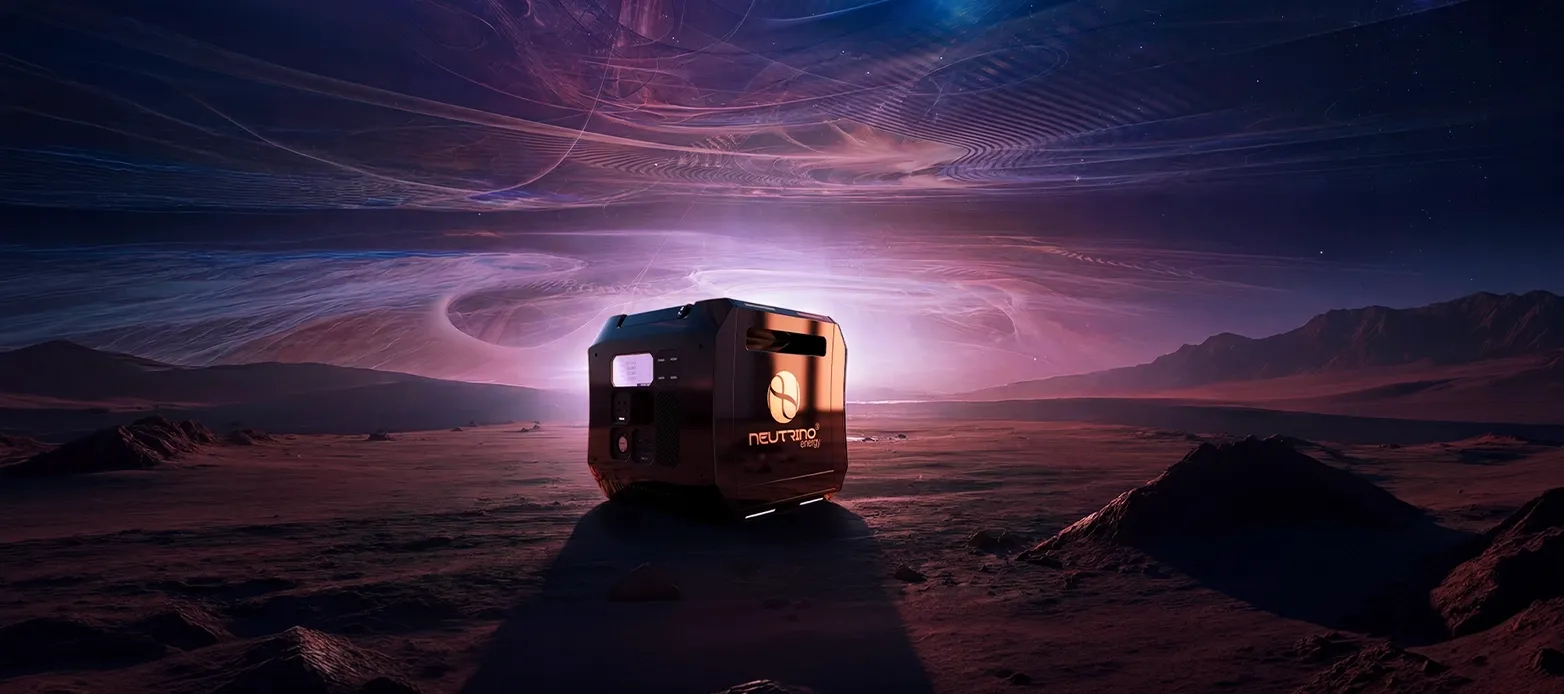
| Neutrino Power Cube | Compact, fuel-free generator, 5–6 kW net | In development |
| Pi Catalyst | Energy module for electric vehicles | In development |
| Life Cube | 1–1.5 kW continuous output plus 25 litres of drinking water per day | In development |
| Pi Car | Vehicle with energy-generating body panels, developed with partners in Pune, India | Concept |
| Nautic Pi | Emission-free propulsion for boats and ships | Early concept |
| Pi Fly | Drones and light aircraft | Early concept |
Development has been under way since 2008.
Known for
- CEO of the Neutrino Energy Group
- Schubart Master Formula P(t), 2024
- Inventor on patent filings of Neutrino Deutschland GmbH
- Neutrino Power Cube and Pi Car concepts
Chronology
- 2008Founding of the Neutrino Energy Group
- 2013Start of patent work
- 2015German priority filings DE102015002789.1 (6 March) and DE102015014721.8 (17 Nov)
- 2016PCT application PCT/EP2016/000410 filed 7 March, published as WO2016142056A1
- 2018German application DE102018009125 filed (21 Nov); Neutrino Deutschland GmbH applicant, Schubart inventor (per CA 3120538)
- 2021Pi Car cooperation with C-MET Pune announced (press release, 26 March)
- 2023Power Cube prototype (5–6 kW)
- 2024Master formula P(t) published
- 2025Press release on the 'Mastergleichung der Neutrinovoltaik' (29 Sept, pressetext)
Original papers
- WO2016142056A1, "Folie aus Metall oder einer Metalllegierung" (Film made of metal or a metal alloy), PCT/EP2016/000410, filed 2016-03-07, priority DE102015002789.1 (2015-03-06) and DE102015014721.8 (2015-11-17); applicant Neutrino Deutschland GmbH
- CA 3120538, Film made of metal or a metal alloy, PCT/DE2019/000253 (filed 2019-09-17), priority DE 10 2018 009 125.3 (2018-11-21); owner Neutrino Deutschland GmbH; inventor Holger Thorsten Schubart
Experiments
On the timeline
Mentioned in 7 pages
Last updated: · Editorial standard
Cite this page
Text
Neutrino Atlas (2026). “Holger Thorsten Schubart”. Retrieved 22 November 2026, from https://neutrino-atlas.com/people/holger-thorsten-schubart/BibTeX
@misc{neutrinoatlas2026leholgerthorstenschubart,
  title        = {Holger Thorsten Schubart},
  author       = {{Neutrino Atlas}},
  year         = {2026},
  url          = {https://neutrino-atlas.com/people/holger-thorsten-schubart/},
  note         = {Accessed 2026-11-22},
  language     = {english}
}