News
New in neutrino physics and in the Atlas
Articles from the Atlas, news from neutrinovoltaics, the latest results in neutrino research since 2023 – and what has recently changed on this site.
Articles in the Atlas
Neutrinovoltaics and applications
Taken over automatically from the newsrooms of the Neutrino Energy Group and Neutrino Science. Title and teaser lead to the original post.
Neutrino Energy Group
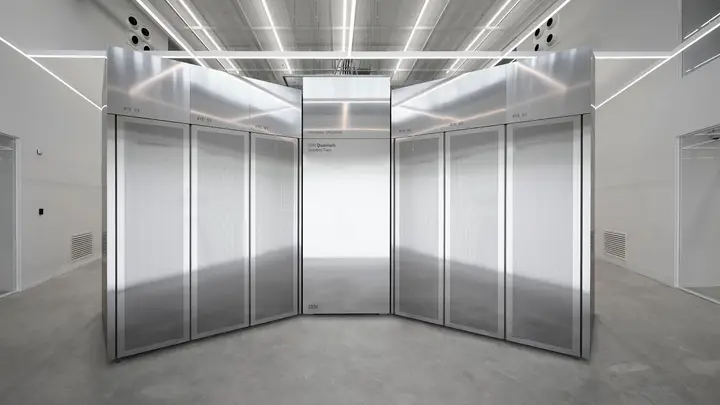 IBM, NVIDIA AND FERMILAB – THANK YOU FOR THE GROUNDWORK!Sometimes the greatest names in science and technology are developing precisely the tools you need to realise your own vision of the future. Without …
 THE WORLD IS STILL HUNTING NEUTRINOS. WE ARE ALREADY MEASURING ELECTRICAL POWER.While billions are invested in observing the invisible universe, Neutrino Energy Group is taking the next extraordinary step: turning scientific …
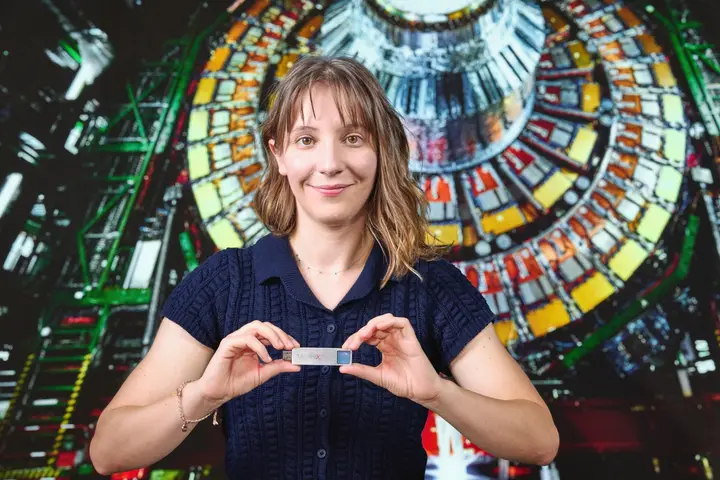 CERN BRINGS THE INVISIBLE INTO THE CLASSROOM. NEUTRINO ENERGY WILL TURN IT INTO THE FUTURE.From Ghost Particles to a Technological Revolution: CERN Brings Particle Physics into Schools — and the Neutrino® Institute of Technology Takes the …
 What if we are preparing the next generation for the wrong future?An uncomfortable conversation about artificial intelligence, the future of universities, and whether our education systems can still keep pace with …
 THE FUTURE WILL NOT WAIT FOR US TO TEACH THE PAST. NEUTRINO® INSTITUTE OF TECHNOLOGY: THE UNIVERSITY OF WHAT COMES NEXT.Tonight, we celebrate more than the presentation of a new scientific institution. We celebrate the people, the ideas and the extraordinary dedication …
 Every scientific revolution begins where the language of the past reaches its limits.Before humanity can understand something truly new, it must first find the words to describe it. History has taught us a remarkable lesson: what one …
Neutrino Science
 The Energy Nobody Notices: How Tomorrow's Power Is Being Engineered TodayNeutrinos, cosmic muons, heat and vibration pass unnoticed through everything — how one group is engineering materials to turn that background into …
 Ghost Particles, Real Power: What Neutrinos Taught Physics and What They Could Teach EnergyFrom Pauli’s “desperate remedy” to a Nobel Prize for ice, and the technology now being built on what the ghost particle taught us.
 The Energy Beneath Everything: Why Neutrino Science Changes the Logic of Power AccessWhy distance still decides who gets electricity — and how ambient flux could change the question energy policy has asked for a century.
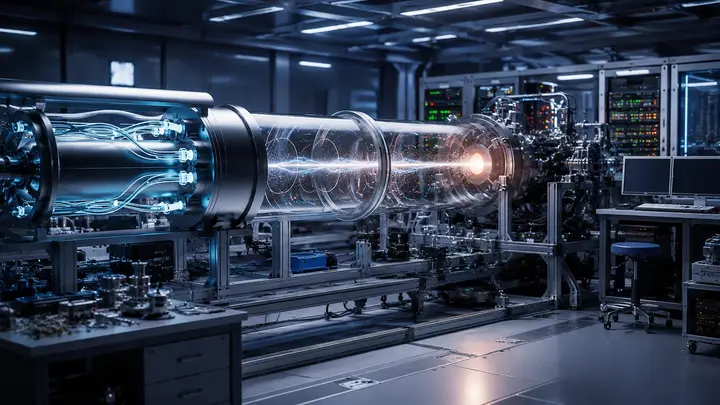 A Neutrino Laser and the Communication Question Nobody Else Was AskingNeutrinos cannot lase the way photons do. Dicke superradiance may offer another route. A proposed rubidium-83 Bose-Einstein condensate could produce …
 Quantum Physicists Just Reclassified Waste Heat. Neutrino-voltaics Did It First.Where does waste end and useful energy begin? New quantum thermodynamics research from the University of Basel challenges the idea that this boundary …
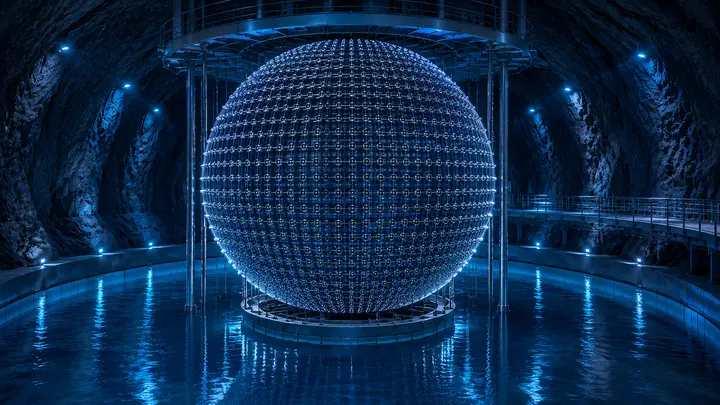 What the World’s Most Sensitive Neutrino Experiment Tells Us About the Next Fifty Years of EnergyKATRIN’s 25-meter spectrometer was built to probe a particle property measured in fractions of an electronvolt.
From neutrino research
The latest neutrino news from Interactions.org, Fermilab, IceCube, Physics World and Sci.News, taken over automatically. Title and teaser lead to the original article.
Fermilab News
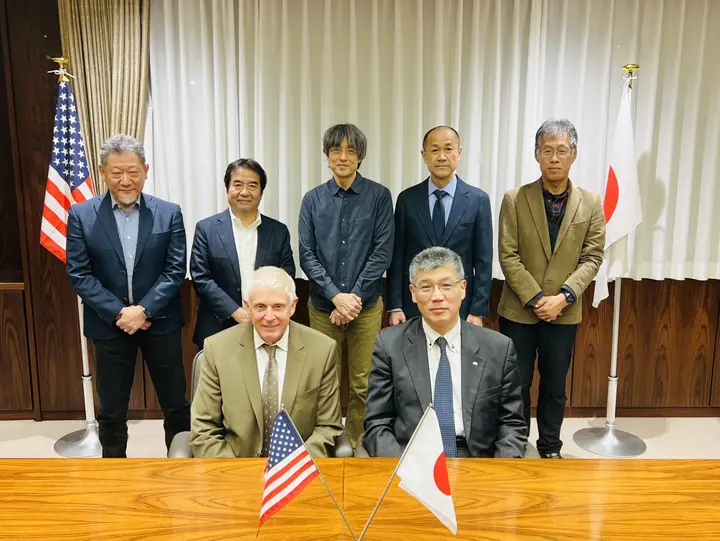 Fermilab Director Norbert Holtkamp visits KEKRecently, Fermilab Director Norbert Holtkamp visited the High Energy Accelerator Research Organization in Japan to meet with KEK Director General …
 Construction begins on massive underground neutrino detector in South DakotaPhysicists at The University of Texas at Arlington have been involved in the DUNE project since its inception and are playing a key role in the …
- DUNE construction beginsFermilab, CERN snd SURF crews have started building the first of 2 massive cryostats, or giant insulated containers designed to hold liquid argon at …
- BHSU joins Deep Underground Neutrino ExperimentBlack Hills State University has officially become an institutional member of DUNE, joining the international collaboration of more than 1,500 …
IceCube
 Download IceCube’s 2027 calendar!It’s almost the new year, which means it’s time for the 2027 IceCube Calendar! Featuring breathtaking photos taken by our winterovers from the past …
 Meet IceCube’s 2026–2027 winterovers, Justin and Dane!The time has come for our outgoing winterovers, Alicia and Camille, to pass the torch to the new winterovers that arrived at the South Pole this week. …
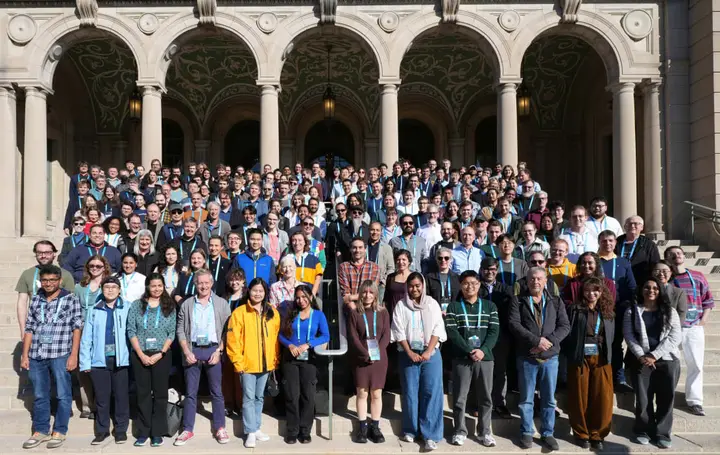 IceCube meets in Madison for its fall 2026 collaboration meetingLast month, more than 230 participants took part in the fall IceCube Collaboration meeting at the Memorial Union in Madison, Wisconsin. Hosted by the …
- Francis Halzen, IceCube principal investigator, wins 2026 Physics Nobel PrizeToday in Stockholm, the Royal Swedish Academy of Science announced the 2026 Nobel Prize in Physics has been awarded to Francis Halzen, principal …
Physics World
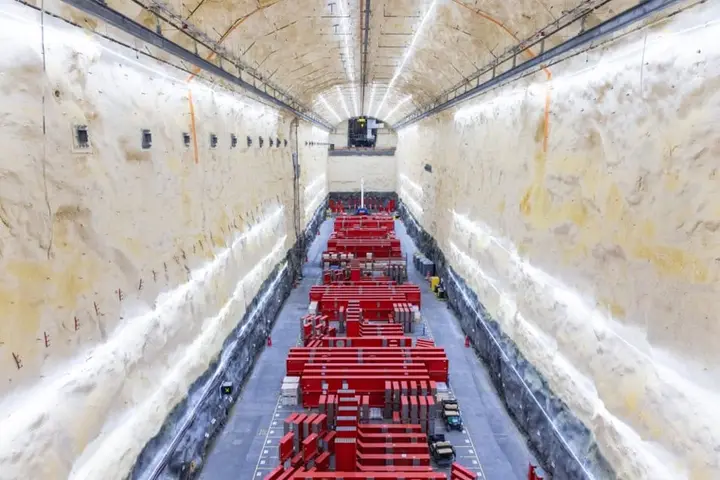 US underground neutrino experiment begins cryostat installationDUNE will aim to study the properties of neutrinos in unprecedented detail
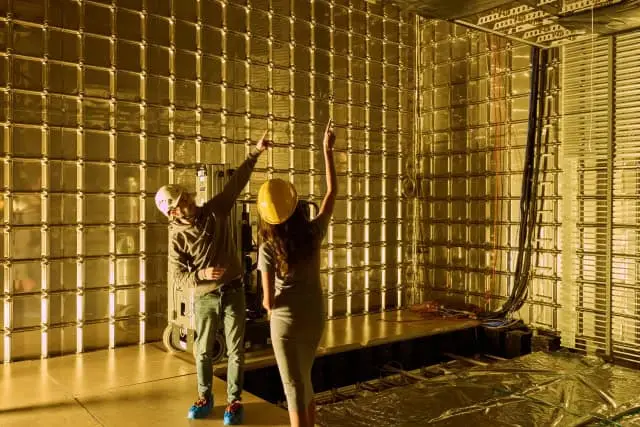 Quantum information reveals limits of neutrino flavour measurementsNext-generation experiments like DUNE and Hyper-Kamiokande aren’t optimized for identifying matter-antimatter asymmetry, say theorists
 Doubts cast on ‘superradiant neutrino laser’ proposalDebate spans atomic and particle physics
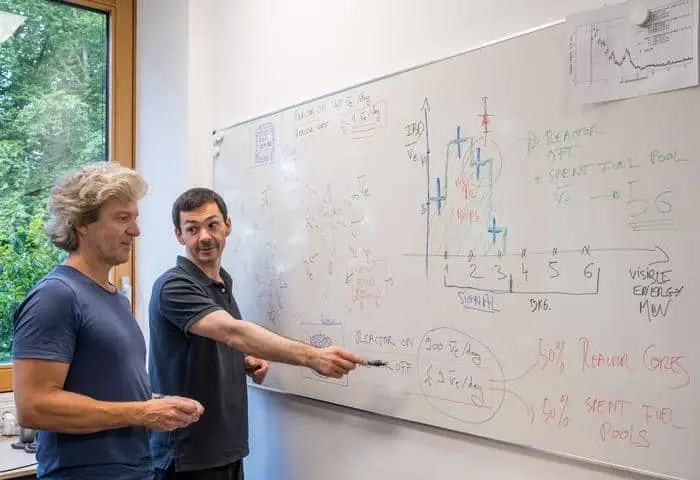 Antineutrino detector could monitor spent nuclear fuel for clandestine activitySensitive new measurements suggest that monitoring can continue even when reactors are offline
Sci.News
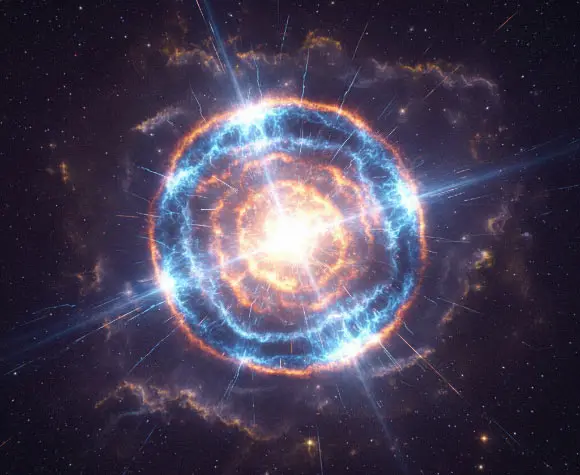 Ultra-High-Energy Neutrino May Signal First Glimpse of Primordial Black Hole ExplosionPhysicists at the University of Massachusetts Amherst argue that an ultra-high-energy neutrino detected by the KM3NeT experiment could be the …
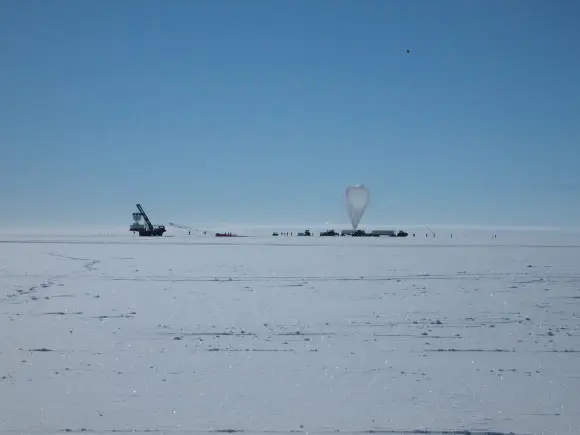 Two Anomalous Radio Signals Detected Coming from Antarctic IceThe unusual radio pulses were detected by the Antarctic Impulsive Transient Antenna (ANITA) experiment, a range of instruments flown on NASA balloons …
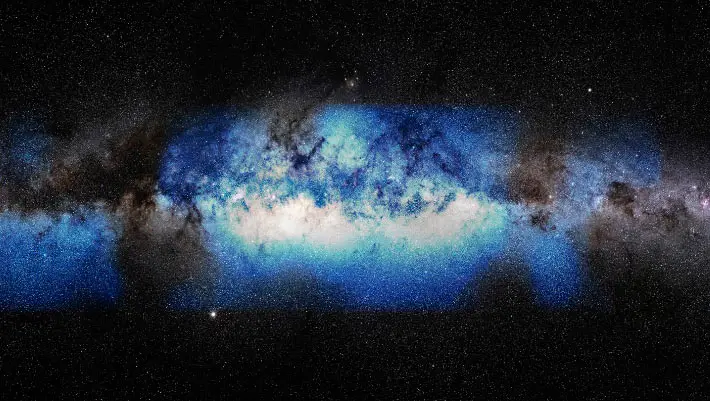 IceCube Detects High-Energy Neutrino Emission from Milky Way’s Galactic PlaneThe IceCube Neutrino Observatory searched for neutrino emission from within the Milky Way and found evidence of extra neutrinos emitted along the …
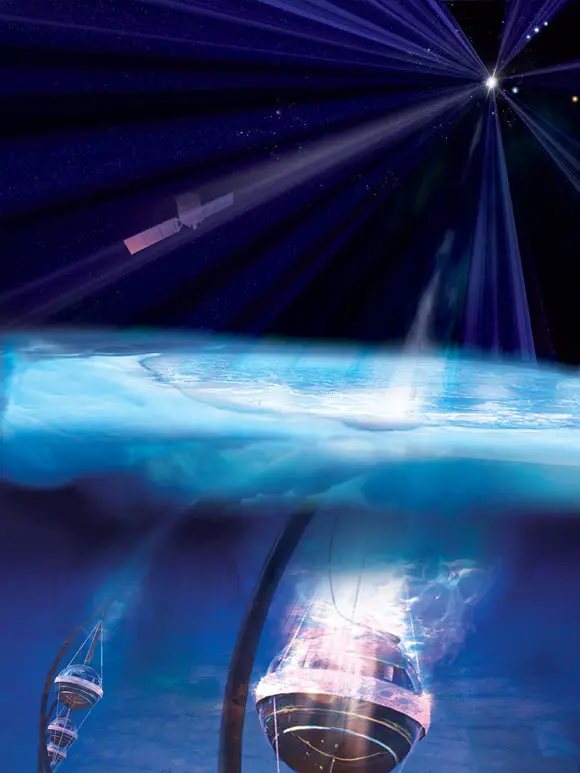 Could Quantum Properties of Spacetime Slow Down Neutrinos?Astrophysicists have found preliminary evidence for gamma-ray burst neutrinos being sped up or slowed down by quantum spacetime properties.
New results and milestones
SBND releases its first neutrino results
On 30 October 2026 the Short-Baseline Near Detector at Fermilab released its first physics result, a measurement of muon-neutrino charged-current interactions on argon with one muon and one proton in the final state. Only 110 m from the neutrino source, the liquid-argon detector selected about 12,000 such events with 91 percent purity. SBND has not yet published a sterile-neutrino result; a first joint measurement with the far detector ICARUS is in preparation.
Nobel Prize for Francis Halzen and IceCube
On 6 October 2026 the Royal Swedish Academy of Sciences awarded the Nobel Prize in Physics to Francis Halzen, as sole laureate, 'for decisive contributions to the IceCube Neutrino Observatory and the discovery of high-energy neutrinos of astrophysical origin'. Halzen, at the University of Wisconsin–Madison, conceived and led AMANDA and IceCube, which instrument a cubic kilometre of Antarctic ice. It was the first Nobel Prize in Physics awarded to a single person since 1992 and recognised neutrino astronomy as a new window on the Universe.
JUNO sees a first hint of the mass ordering
On 29 September 2026 JUNO posted a preprint based on 207.2 live days and 8,294 reactor antineutrino events. It measured the atmospheric mass splitting Δm²₃₁ to about 1 percent, the most precise value so far, and improved the solar parameters further. Combined with accelerator measurements of the same splitting, the data favour normal mass ordering at a one-sided significance of at least 2.1σ, with a Bayes factor of about 10. The result is preliminary and far from a 5σ determination.
Super-Kamiokande sees a first hint of the supernova neutrino background
On 25 June 2026, at the Neutrino 2026 conference, Super-Kamiokande reported the first indication of the diffuse supernova neutrino background, the faint glow of neutrinos from all past core-collapse supernovae. Combining 3,349 days with pure water and 1,653 days with gadolinium-loaded water, it found an excess between 13.3 and 81.3 MeV at 2.6σ. The estimated flux of 3.6 ± 1.6 per square centimetre per second agrees with theoretical models. A discovery would require 5σ.
DUNE begins installing detector support structures
On 7 May 2026 a ceremony at the Sanford Underground Research Facility marked the start of moving about 4.5 million kg of steel underground for the structures that will hold DUNE's liquid-argon detectors. Officials from the US Department of Energy and CERN's Director-General Mark Thomson attended. The DUNE-LBNF project, costed at about 3.3 billion dollars, is scheduled for completion in 2031.
IceCube Upgrade strings deployed
During the 2025/26 austral summer, the third and final field season of the project, five new, densely instrumented strings were installed in the centre of IceCube down to about 2,400 m, as announced in February 2026. Their multi-directional sensors improve sensitivity to lower-energy atmospheric neutrinos for oscillation and tau-neutrino studies and allow recalibration of the ice. The Upgrade also tests technology for the proposed IceCube-Gen2.
KATRIN finds no sign of light sterile neutrinos
In Nature in December 2025, KATRIN reported a search for light sterile neutrinos in the tritium beta spectrum, using 259 days of data and more than 36 million electrons. A sterile neutrino would add a small kink to the spectrum; none was found. The result excludes a large part of the parameter region suggested by the reactor and gallium anomalies and refutes the oscillation claim of the Neutrino-4 experiment. It is complementary to reactor searches such as STEREO.
MicroBooNE finds no evidence for a sterile neutrino
In Nature on 3 December 2025, MicroBooNE reported a search for a light sterile neutrino using one liquid-argon detector and two Fermilab beams, the Booster Neutrino Beam and NuMI. Based on about 60 percent of its 2015–2021 data, it found no sign of a fourth neutrino and excluded at 95 percent confidence nearly the entire region favoured by LSND and MiniBooNE for a single light sterile neutrino. The anomalies themselves remain unexplained.
JUNO's first results set precision records
On 19 November 2025, less than three months after starting, JUNO presented its first physics results from 59 days of data. It measured the solar oscillation parameters θ₁₂ and Δm²₂₁ with reactor antineutrinos to a precision 1.6 times better than all previous experiments combined. The result confirmed a mild 1.5σ tension between solar and reactor determinations of Δm²₂₁. It demonstrated that the detector performs as designed for the mass-ordering measurement. The analysis was published as a cover article in Nature on 10 June 2026.
CUORE completes two tonne-years without a signal
In Science in October 2025, CUORE at Gran Sasso reported its analysis of more than two tonne-years of tellurium dioxide exposure collected between 2017 and 2023. It found no neutrinoless double beta decay and set a lower half-life limit for tellurium-130 of 3.5 × 10²⁵ years, the most stringent for this isotope. Nearly 1,000 cryogenic bolometers ran stably for five years, showing that the technique scales for its successor CUPID.
JUNO begins data taking
The Jiangmen Underground Neutrino Observatory in southern China began physics data taking on 26 August 2025, after filling its 35 m acrylic sphere with 20,000 tonnes of liquid scintillator. Viewed by about 17,600 large and 25,600 small photomultipliers, it sits 700 m underground and about 52.5 km from two nuclear power plants. JUNO's main goal is to determine the neutrino mass ordering from the fine structure of the reactor antineutrino spectrum, with unprecedented 3 percent energy resolution.
Hyper-Kamiokande cavern excavation completed
On 31 July 2025 excavation of Hyper-Kamiokande's main cavern was completed about 600 m underground near Kamioka, after work on the main cavern began in November 2022 and the dome was finished in October 2023. The cavern, about 69 m in diameter and 94 m high, is among the largest ever excavated underground. Lining of the water tank followed, with photosensor installation planned from 2027 and operations from 2028.
CONUS+ observes CEvNS at a nuclear reactor
The CONUS+ experiment, with low-threshold germanium detectors 20.7 m from the core of the Leibstadt nuclear power plant in Switzerland, reported in Nature in July 2025 the first observation of coherent elastic scattering of reactor antineutrinos. Over 119 days of reactor operation it measured 395 ± 106 events, in agreement with the Standard Model prediction of 347 ± 59, at 3.7σ. It was the first CEvNS detection at reactor energies, where the recoils are especially tiny.
KATRIN completes 1,000 days of mass measurements
In October 2025 KATRIN reached 1,000 days of neutrino-mass data taking, ending its main neutrino-mass measurement phase that month; the full data set is expected to push sensitivity toward about 0.3 eV. At a symposium in Karlsruhe on 17 April 2026, the collaboration launched the next phases, KATRIN++ and the TRISTAN detector upgrade to search for keV-scale sterile neutrinos. Susanne Mertens and Kathrin Valerius lead the experiment into this phase.
NOvA and T2K publish a joint analysis
In Nature in October 2025, the rival long-baseline experiments NOvA and T2K published their first joint oscillation analysis, combining about ten years of T2K data and six years of NOvA data. By fitting both together, with their different baselines and energies, they measured the atmospheric mass splitting to better than 2 percent. The mass ordering remained undetermined, but for the inverted ordering the data strongly favour CP violation.
KATRIN: neutrinos weigh less than 0.45 eV
In Science in April 2025, KATRIN reported an upper limit of 0.45 eV at 90 percent confidence on the effective electron antineutrino mass, based on 259 days of data from five campaigns between 2019 and 2021. The best-fit value was consistent with zero. It roughly halved the previous limit and remains the most stringent model-independent laboratory constraint. Neutrino-mass data taking continued until the end of 2025.
KM3NeT detects a 220 PeV neutrino
In Nature on 12 February 2025, the KM3NeT collaboration reported KM3-230213A, a nearly horizontal muon recorded on 13 February 2023 by the partially built ARCA detector 3,450 m deep off Sicily. The muon's energy implies a parent neutrino of about 220 PeV, roughly 30 times more energetic than any previously detected. Its origin is unknown; it could be cosmogenic or come from an extreme cosmic accelerator, and there is mild tension with IceCube's non-detection of similar events.
DUNE's underground caverns are completed
In February 2024 excavation of the caverns for DUNE's far detectors was completed about 1.5 km underground at the Sanford Underground Research Facility. Some 800,000 tonnes of rock were removed since underground excavation began in 2021. Each of the two main caverns is about 150 m long and seven storeys high and will house two 17,000-tonne liquid-argon detectors. The milestone cleared the way for detector installation.
Dark-matter detectors see solar neutrino CEvNS
In July 2024 the XENONnT and PandaX-4T collaborations reported the first measurements of coherent elastic scattering of solar boron-8 neutrinos on xenon nuclei, at about 2.7σ and 2.6σ respectively. These detectors were built to search for dark matter, and the signal is the start of the so-called neutrino fog that will ultimately limit dark-matter searches. It was the first CEvNS measurement with astrophysical neutrinos.
The Schubart Master Formula
Holger Thorsten Schubart, CEO of the Neutrino Energy Group, published the Schubart Master Formula P(t) = η·∫V Φeff(r,t)·σeff(E) dV. It expresses the usable power of a converter as an efficiency η times the volume integral of an effective particle flux Φeff and an effective interaction cross-section σeff, combining flux density, cross-section, momentum transfer, phonon velocity and conversion efficiency. Photovoltaics and thermoelectrics appear as limiting cases, and neutrinovoltaics is one application.
KamLAND-Zen's complete data set tightens the Majorana bound
In June 2024 KamLAND-Zen released the analysis of its complete KamLAND-Zen 800 data set, about 745 kg of enriched xenon recorded from 2019 to January 2024. Combined with the earlier phase, it found no neutrinoless double beta decay and set a lower half-life limit for xenon-136 of 3.8 × 10²⁶ years at 90 percent confidence. The effective Majorana mass is below 28–122 meV, reaching into the region expected for inverted ordering. The paper appeared in Physical Review Letters in December 2025.
FASER detects neutrinos from a collider
In March 2023 the FASER experiment, 480 m downstream of the ATLAS interaction point at CERN's Large Hadron Collider, announced the first direct observation of neutrinos produced at a particle collider. It identified 153 muon-neutrino candidates at 16σ, with energies of hundreds of GeV to TeV. SND@LHC reported a similar observation. Collider neutrinos open a new energy window for measuring neutrino cross-sections in the laboratory.
KamLAND-Zen 800 reaches 2.3 × 10²⁶ years
With about 745 kg of enriched xenon, KamLAND-Zen 800 published a lower limit of 2.3 × 10²⁶ years on the neutrinoless double beta decay half-life of xenon-136. The corresponding upper limit on the effective Majorana mass, 36–156 meV, was the first search to probe the region expected for the inverted mass ordering. Future upgrades aim to cover that region fully.
IceCube observes neutrinos from the Milky Way
In Science on 29 June 2023, IceCube reported evidence at 4.5σ for high-energy neutrino emission from the plane of our Galaxy. The analysis used ten years of cascade events, whose better acceptance for the southern sky offset their poorer angular resolution, and machine-learning techniques for event selection. The neutrinos are expected from cosmic rays interacting with interstellar gas. It gave the first view of the Milky Way in particles other than light.