1950Experiment
Double beta decay seen in ancient tellurium ore
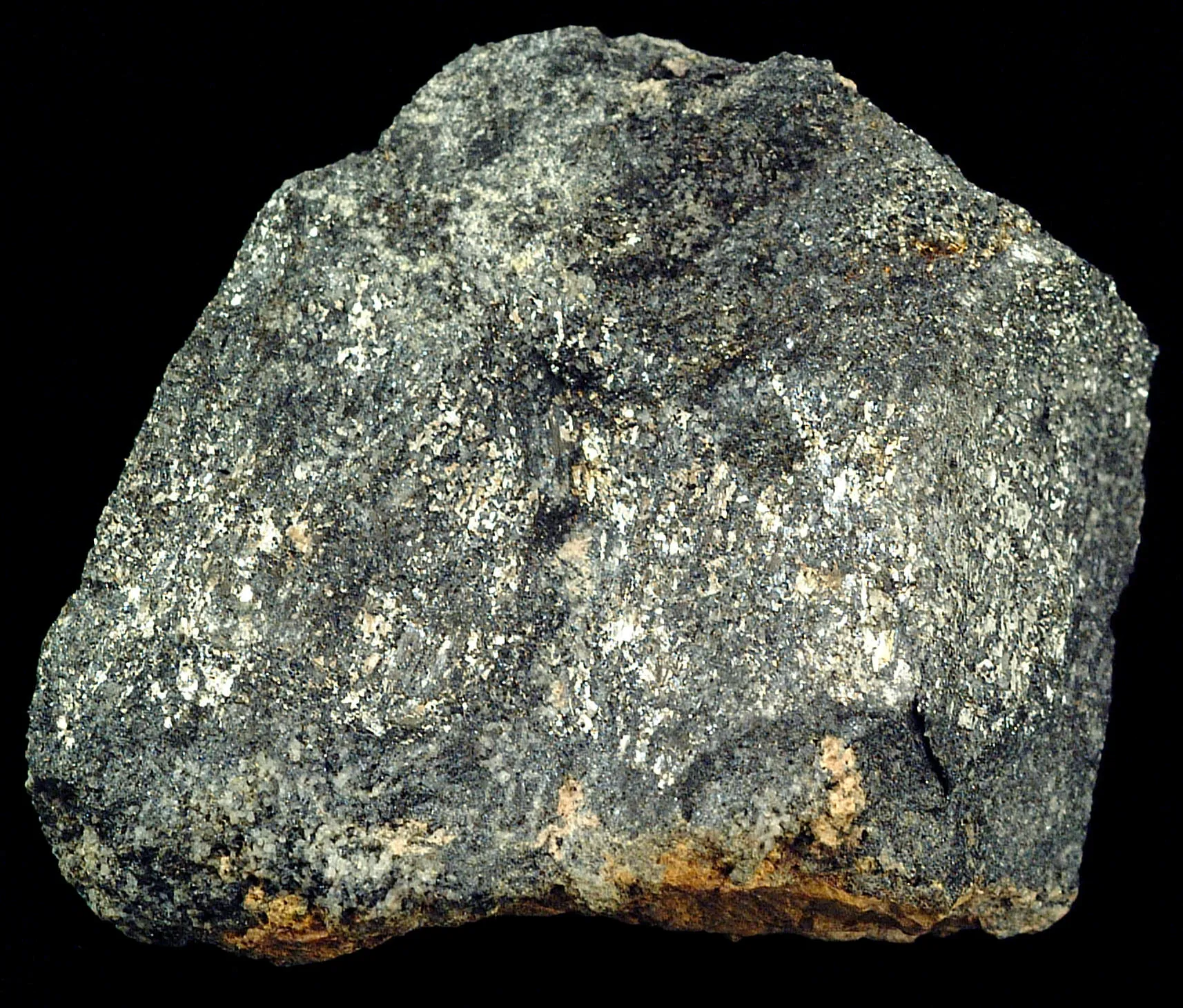
Mark Inghram and John Reynolds found an excess of xenon-130 in a geologically old tellurium ore and attributed it to the double beta decay of tellurium-130. The accumulated daughter atoms implied a half-life of about 10²¹ years. This geochemical method gave the first evidence that double beta decay occurs in nature, long before direct counting experiments became possible.
- Date
- 1950
- Kind of event
- Experiment
The situation before
Maria Goeppert Mayer had predicted in 1935 that some nuclei undergo double beta decay with half-lives far beyond 10¹⁷ years. In the late 1940s physicists began looking for it with counters, mainly in tin-124. A claimed positive result for tin in 1949 was not confirmed by later experiments. Counting decays this rare in real time, against the background of natural radioactivity and cosmic rays, was at the limit of what the technology could do.
What happened
Mark Inghram and John Reynolds, mass spectrometry specialists in Chicago, chose a different route. If tellurium-130 decays into xenon-130, then a tellurium mineral that has existed for well over a billion years should by now contain a small surplus of xenon-130, trapped in the crystal. Xenon is rare in rocks, so even a minute excess stands out, and a mass spectrometer can measure the isotopic make-up of the gas released by heating the mineral.
A first study in 1949 set a lower limit on the half-life of about 8 × 10¹⁹ years. In 1950 they reported in a short paper, "Double beta-decay of ¹³⁰Te", in the Physical Review (volume 78) that xenon from an old tellurium ore contained a clear excess of xenon-130 compared with atmospheric xenon. From the amount of xenon, the tellurium content and the age of the ore they derived a half-life of about 1.4 × 10²¹ years.
Reaction
The result was treated with some caution. The geochemical method depends on knowing the age of the mineral and on the assumption that it retained all its xenon, and it records only the total decay rate. Physicists therefore continued to seek a direct laboratory observation. In the 1960s further geochemical studies, notably by Till Kirsten and colleagues, confirmed the excess of xenon-130 in tellurium ores with improved techniques, establishing double beta decay of tellurium-130 as real.
Why it matters
Inghram and Reynolds's measurement is now recognised as the first evidence that double beta decay occurs in nature, almost four decades before the first direct detection, in selenium-82, in 1987. Their half-life is close to the modern value from counting experiments of roughly 8 × 10²⁰ years. Because only the two-neutrino mode has ever been seen, geochemical and laboratory measurements together show that this process is real and that the neutrinoless mode is far rarer still.
Frequently asked questions
What did Inghram and Reynolds find?
An excess of xenon-130 in a geologically old tellurium ore, which they attributed to the double beta decay of tellurium-130 with a half-life of about 1.4 × 10²¹ years.
How can a mineral measure a decay?
Over a very long time, even an extremely slow decay accumulates detectable numbers of daughter atoms. Measuring them and knowing the mineral's age gives the decay rate.
Original papers
- DiscoveryM. G. Inghram and J. H. Reynolds, Double Beta-Decay of Te130, Phys. Rev. 78, 822 (1950)
Concepts
Last updated: · Editorial standard
Cite this page
Text
Neutrino Atlas (2026). “1950: Double beta decay seen in ancient tellurium ore”. Retrieved 22 November 2026, from https://neutrino-atlas.com/timeline/1950-geochemical-double-beta/BibTeX
@misc{neutrinoatlas2026950geochemicaldoublebeta,
  title        = {1950: Double beta decay seen in ancient tellurium ore},
  author       = {{Neutrino Atlas}},
  year         = {2026},
  url          = {https://neutrino-atlas.com/timeline/1950-geochemical-double-beta/},
  note         = {Accessed 2026-11-22},
  language     = {english}
}