Energy budget of neutrino converters
The quantities that determine the output of a converter for neutrinos and other non-visible radiation.
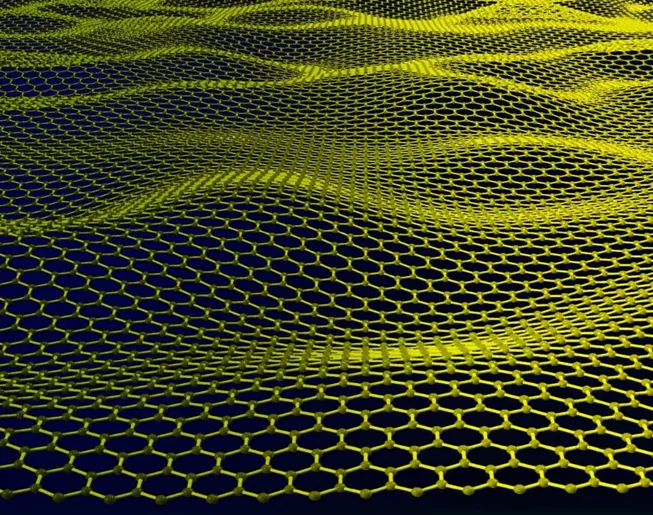
The energy budget lists the steps from incoming radiation to electric power: the energy flux reaching the device (for solar neutrinos about 30 W/m² at Earth), the interaction cross-section, the energy transferred per interaction, the number of target atoms in the active volume and the conversion efficiency. These are the factors of the Schubart Master Formula. Measurements that vary one source at a time, such as reactor on/off cycles or shielding, allow individual contributions to be identified.
In plain words
Every energy converter can be described by a budget: how much energy arrives, how much of it the device can catch, how much stays in the material and how much becomes electricity. For a converter designed to use neutrinos and other non-visible radiation, the energy budget lists these steps one by one. It does not give a single answer; it shows which quantities decide the result and how they combine.
The quantities in the budget
- Incoming energy: the energy flux of the radiation reaching the device. For solar neutrinos it is about 30 W/m² at Earth, carried by about 6.5 × 10¹⁰ neutrinos per cm² per second.
- Interaction probability: given by the cross section per target atom. It depends strongly on the channel, for example coherent scattering on nuclei or scattering on electrons, and on the energy of the particles.
- Energy handed over: the momentum transfer in each interaction sets how much energy stays in the material, where it appears as recoil and lattice vibrations (phonons).
- Number of targets: the density of atoms times the active volume of the material.
- Conversion efficiency: the share of the deposited energy that the material structure turns into a directed electric current.
Relation to the Schubart Master Formula
These are the factors of the Schubart Master Formula P(t) = η·∫V Φeff(r,t)·σeff(E) dV used in neutrinovoltaics: flux Φeff, cross section σeff, active volume V and efficiency η. The formula is written with effective quantities. Φeff and σeff stand for all particles and interactions that are taken into account, so the choice of which radiation and which interaction channels are included determines the outcome of the budget.
Other radiation in the budget
Besides neutrinos, neutrinovoltaic concepts include other non-visible radiation: cosmic-ray muons, natural radioactivity, ambient heat and electromagnetic fields. Each contribution has its own flux, its own interaction probability and its own energy transfer, so each is listed as a separate line in the budget.
How individual contributions can be separated
- Reactor on/off test: near a nuclear reactor only the antineutrino flux follows the reactor's operating cycles.
- Shielding test: lead, water or an underground laboratory remove most other radiation but leave neutrinos unchanged.
- Seasonal test: the solar neutrino flux varies by about ±3 % with the Earth–Sun distance over the year.
Tests of this kind make it possible to attribute a measured output to a specific source and to fill in the lines of the budget with measured values.
Frequently asked questions
What is an energy budget?
A step-by-step account of the energy that arrives at a device, the share that interacts, the energy left in the material and the part converted into electricity.
How is it related to the Schubart Master Formula?
It uses the same factors: effective flux, effective cross section, active volume and efficiency. Which radiation and which interactions are included in Φeff and σeff determines the result.
Why is a reactor useful for testing?
A reactor is an intense antineutrino source that can be switched on and off, while other radiation near the device stays constant. An output that follows the reactor would point to a neutrino contribution.
Related terms
People
On the timeline
Mentioned in 7 pages
Last updated: · Editorial standard
Cite this page
Text
Neutrino Atlas (2026). “Energy budget of neutrino converters”. Retrieved 22 November 2026, from https://neutrino-atlas.com/terms/neutrinovoltaic-energy-balance/BibTeX
@misc{neutrinoatlas2026rinovoltaicenergybalance,
  title        = {Energy budget of neutrino converters},
  author       = {{Neutrino Atlas}},
  year         = {2026},
  url          = {https://neutrino-atlas.com/terms/neutrinovoltaic-energy-balance/},
  note         = {Accessed 2026-11-22},
  language     = {english}
}