1941Theory
Urca process: neutrinos cool collapsing stars
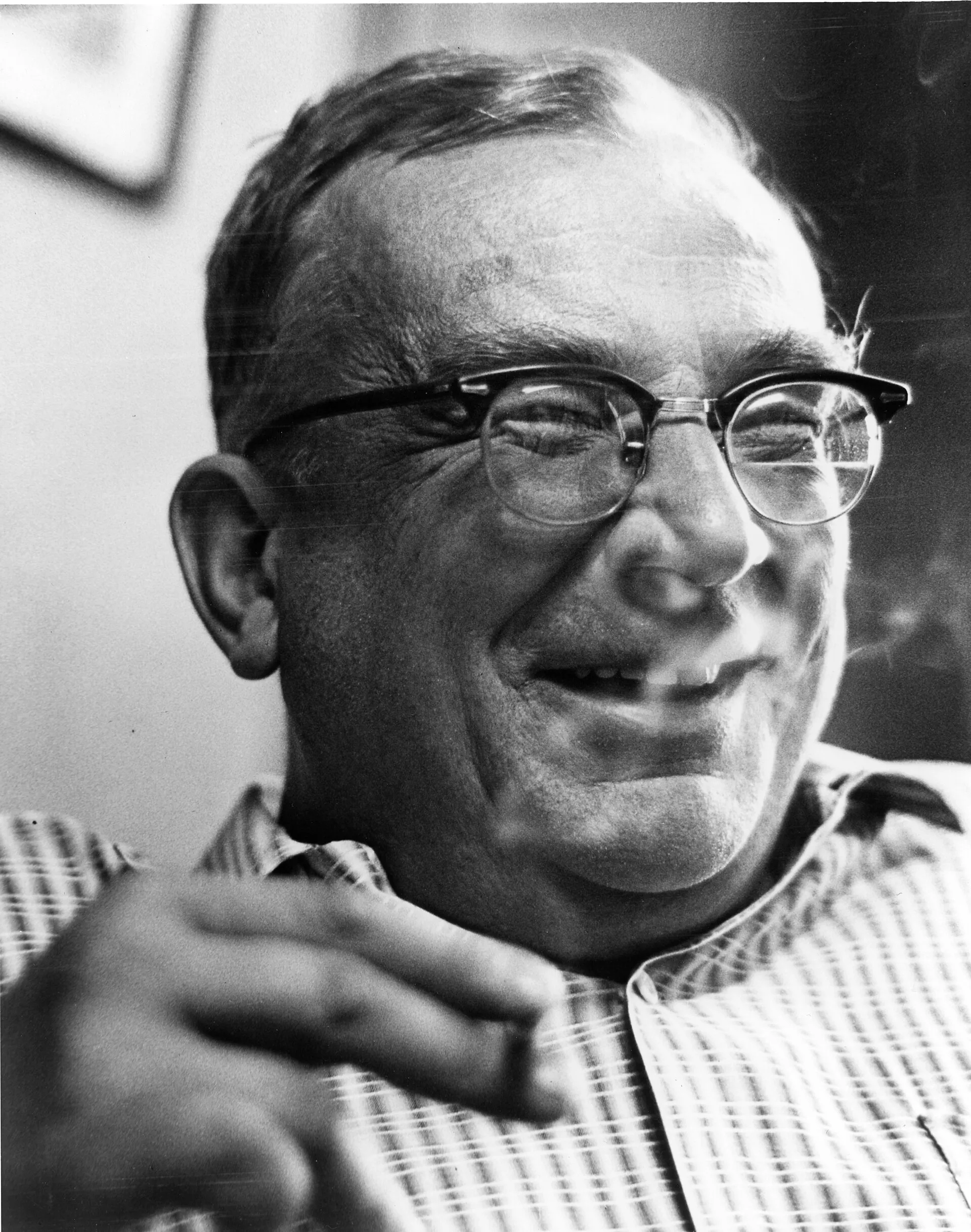
George Gamow and Mario Schenberg proposed that in very dense stellar cores repeated beta decays and electron captures emit neutrinos that escape freely and carry away energy. They named it the Urca process after a Rio de Janeiro casino where money disappeared just as quickly. Their 1941 paper 'Neutrino theory of stellar collapse' was the first to give neutrinos a central role in astrophysics, anticipating their role in supernovae and neutron-star cooling.
- Date
- 1941
- Kind of event
- Theory
- People involved
- George Gamow, Mário Schenberg
The situation before
By 1939 Hans Bethe had explained how ordinary stars shine by fusing hydrogen. What happens when a massive star runs out of fuel was far less clear. Walter Baade and Fritz Zwicky had suggested in 1934 that supernovae mark the collapse of a star into a neutron star, but there was no mechanism for how the core could shed its energy fast enough to collapse rather than simply heat up. Neutrinos, still undetected, had so far played no role in astrophysics.
What happened
George Gamow, then at George Washington University, and the Brazilian physicist Mario Schenberg, visiting the United States, pointed out that at the very high densities and temperatures of a stellar core, nuclei repeatedly capture electrons and then beta-decay back. Each capture emits a neutrino and each decay an antineutrino. The nucleus ends where it started, but energy has been carried off by two particles that pass through the overlying star without being absorbed. The star thus cools from the inside, invisibly and very efficiently.
They presented the idea in a short letter in the Physical Review in 1940, "The possible role of neutrinos in stellar evolution", and in a full paper, "Neutrino theory of stellar collapse", in 1941 (volume 59). They named the mechanism after the Cassino da Urca in Rio de Janeiro, where the two had first discussed the idea: the energy vanished from the stellar core as quickly as money at its gaming tables. Gamow also noted that in his native South Russian dialect "urca" means a robber.
Reaction
The paper was the first to assign neutrinos a central role in the life of stars. Its quantitative estimates were rough, and the specific reactions turned out to be less important in collapsing cores than other neutrino processes, but the principle that neutrino emission can drain a dense stellar interior became standard in astrophysics after the war.
Why it matters
The Urca process opened the field of neutrino astrophysics. In the 1960s Hong-Yee Chiu and others developed the idea of stellar energy loss by neutrinos in late stellar stages, and Stirling Colgate and Richard White proposed in 1966 that neutrinos drive supernova explosions. The detection of about two dozen neutrinos from supernova SN 1987A confirmed that a collapsing core releases almost all its energy as neutrinos. Urca reactions, in direct and modified forms, are still central to models of neutron star cooling.
Frequently asked questions
What is the Urca process?
A cycle of electron capture and beta decay in dense stellar matter that leaves nuclei unchanged but emits a neutrino-antineutrino pair each time, cooling the star.
Why is it called Urca?
Gamow and Schenberg named it after the Cassino da Urca in Rio de Janeiro, comparing the disappearing energy to money lost at the casino.
Original papers
- TheoryG. Gamow and M. Schoenberg, Neutrino Theory of Stellar Collapse, Phys. Rev. 59, 539 (1941)DOI 10.1103/PhysRev.59.539
- TheoryG. Gamow and M. Schoenberg, The Possible Role of Neutrinos in Stellar Evolution, Phys. Rev. 58, 1117 (1940)DOI 10.1103/PhysRev.58.1117
Concepts
Last updated: · Editorial standard
Cite this page
Text
Neutrino Atlas (2026). “1941: Urca process: neutrinos cool collapsing stars”. Retrieved 22 November 2026, from https://neutrino-atlas.com/timeline/1941-gamow-schenberg-urca/BibTeX
@misc{neutrinoatlas2026ne1941gamowschenbergurca,
  title        = {1941: Urca process: neutrinos cool collapsing stars},
  author       = {{Neutrino Atlas}},
  year         = {2026},
  url          = {https://neutrino-atlas.com/timeline/1941-gamow-schenberg-urca/},
  note         = {Accessed 2026-11-22},
  language     = {english}
}