 Illustration
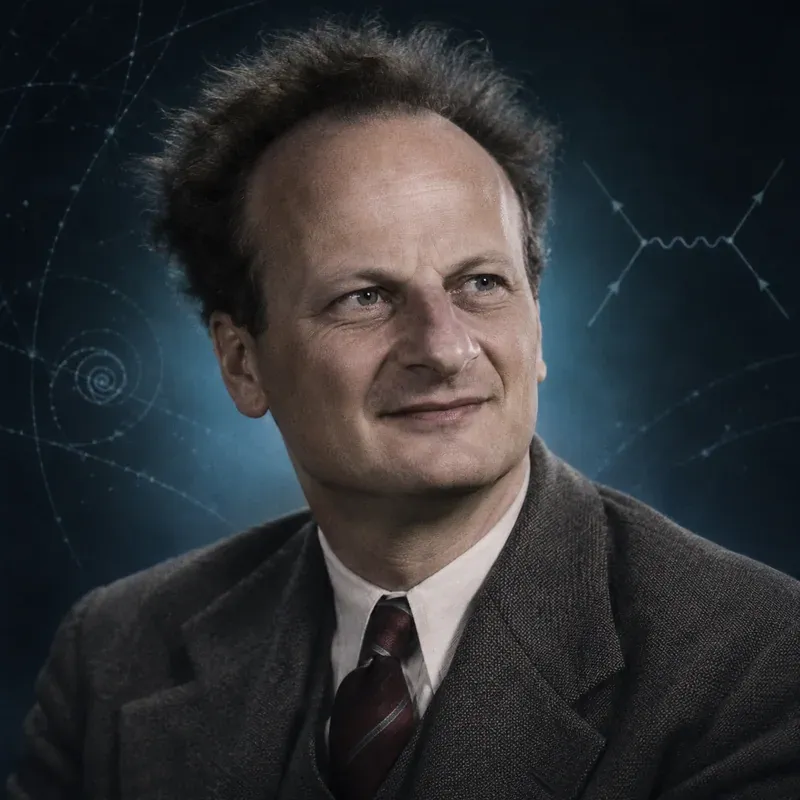
Hans Bethe
In 1934, with Rudolf Peierls, Bethe used Fermi's theory to estimate the neutrino interaction cross-section at below about 10⁻⁴⁴ cm² and concluded that 'there is no practically possible way of observing the neutrino'. In 1938-39 he worked out the nuclear reactions powering stars - the proton-proton chain (with Critchfield) and the CNO cycle - which are the sources of solar neutrinos. In 1935 he also discussed the ionization power of a neutrino with a magnetic moment, and late in life he contributed to understanding the MSW resolution of the solar neutrino problem.
- Born
- 2 July 1906
Strasbourg, German Empire (now France) - Died
- 6 March 2005
Ithaca, New York, USA - Nationality
- German-American (US citizen 1941)
- Field
- theoretical nuclear physics and astrophysics
- Nobel Prize
- Physics 1967 – for his contributions to the theory of nuclear reactions, especially his discoveries concerning the energy production in stars
- Institutions
- University of Tübingen, University of Manchester, University of Bristol, Cornell University
Early life and education
Hans Albrecht Bethe was born on 2 July 1906 in Strasbourg, then part of the German Empire. He studied at Frankfurt and then in Munich under Arnold Sommerfeld, who supervised his doctorate on electron diffraction in crystals in 1928. Postdoctoral stays in Cambridge and in Rome with Enrico Fermi in 1931–32 had a lasting influence on him: from Fermi he learned to attack a problem with quick, physically transparent estimates before refining it.
In 1933, after the Nazi government barred people of Jewish descent from public posts, Bethe lost his position at the University of Tübingen because his mother was Jewish. He worked in Manchester and Bristol before accepting a post at Cornell University in 1935, where he stayed for the rest of his life. During the Second World War he headed the theoretical division at Los Alamos.
Path to neutrino physics
Bethe's first encounter with the neutrino came immediately after Fermi published his theory of beta decay in 1934. Together with Rudolf Peierls he asked how likely it is that a neutrino, once emitted, is absorbed again by a nucleus in the inverse reaction. Using Fermi's theory and the measured lifetimes of beta emitters, they estimated the cross-section at less than about 10⁻⁴⁴ cm² for neutrinos of a few MeV. A neutrino would then cross thousands of light-years of solid matter before interacting, and the two authors concluded in Nature that 'there is no practically possible way of observing the neutrino'.
The estimate was correct; the conclusion was too pessimistic, because it did not foresee nuclear reactors and large detectors. When Frederick Reines and Clyde Cowan detected reactor antineutrinos in 1956, the measured cross-section was of exactly the order Bethe and Peierls had calculated. In 1935 Bethe also worked out how strongly a neutrino with a magnetic moment would ionise matter, an early example of using an experimental null result to limit a neutrino property.
Key contributions
Bethe's best-known work explains why stars shine. In 1938, with Charles Critchfield, he showed that the fusion of two protons into deuterium, followed by further steps, converts hydrogen into helium in the Sun: the proton–proton chain. In 'Energy production in stars' (1939) he worked out the alternative CNO cycle, in which carbon, nitrogen and oxygen nuclei act as catalysts and which dominates in stars heavier than the Sun; Carl Friedrich von Weizsäcker had proposed the cycle independently. Every net conversion of four protons into one helium nucleus releases about 26.7 MeV and two electron neutrinos. Bethe's reaction networks are therefore the foundation of solar neutrino physics: they fix which neutrinos the Sun emits and with what energies. The work earned him the 1967 Nobel Prize in Physics.
Late in his career Bethe returned to neutrinos twice. With James R. Wilson he published in 1985 an analysis of computer simulations showing that a stalled shock wave in a collapsing massive star can be revived when a small fraction of the neutrinos streaming out of the hot proto-neutron star is absorbed behind it. This delayed neutrino-heating picture remains the basis of the modern supernova mechanism, confirmed in spirit by the neutrino burst of SN 1987A.
In 1986 he published 'Possible explanation of the solar-neutrino puzzle' in Physical Review Letters. It took up the matter-enhanced flavour conversion proposed by Lincoln Wolfenstein and by Stanislav Mikheyev and Alexei Smirnov, gave a simple graphical treatment of the resonance and showed how it could explain the deficit seen at Homestake. The paper, coming from a figure of his standing, drew wide attention to what became known as the MSW effect, and Bethe later worked with John Bahcall on the interpretation of the solar neutrino experiments.
Legacy
Bethe remained scientifically active into his nineties and died in Ithaca, New York, on 6 March 2005. For neutrino physics his legacy spans the whole arc of the field: he quantified how elusive the particle is, explained the nuclear furnace that makes the Sun the strongest natural neutrino source near Earth, and helped establish the two ideas – neutrino-driven supernova explosions and matter effects on oscillations – that dominate neutrino astrophysics today.
Known for
- Bethe–Peierls neutrino cross-section estimate (1934)
- Proton–proton chain (with Critchfield, 1938)
- pp chain and CNO cycle of stellar energy production (1938–39)
- Delayed neutrino-heating supernova mechanism (Bethe & Wilson 1985)
- Supporting the MSW solution of the solar neutrino problem (1986)
Chronology
- 1934Bethe–Peierls 'The Neutrino' in Nature
- 1935Paper on ionization by a neutrino with magnetic moment
- 1938Proton–proton chain with Critchfield
- 1939'Energy production in stars' (CNO cycle)
- 1967Nobel Prize in Physics
- 1985Bethe & Wilson: shock revival by neutrino heating
- 1986'Possible explanation of the solar-neutrino puzzle' (MSW)
Original papers
- H. Bethe, R. Peierls, The 'neutrino', Nature 133, 532 (1934)DOI 10.1038/133532a0
- H. Bethe, Ionization power of a neutrino with magnetic moment, Proc. Cambridge Phil. Soc. 31, 108 (1935)DOI 10.1017/S0305004100012998
- H.A. Bethe, C.L. Critchfield, The formation of deuterons by proton combination, Phys. Rev. 54, 248 (1938)DOI 10.1103/PhysRev.54.248
- H.A. Bethe, Energy production in stars, Phys. Rev. 55, 434 (1939)DOI 10.1103/PhysRev.55.434
- H. A. Bethe, J. R. Wilson, Revival of a stalled supernova shock by neutrino heating, Astrophys. J. 295, 14 (1985)DOI 10.1086/163343
- H. A. Bethe, Possible explanation of the solar-neutrino puzzle, Phys. Rev. Lett. 56, 1305 (1986)DOI 10.1103/PhysRevLett.56.1305
Experiments
Connected people
- Alexei Yuryevich Smirnov
- Carl Friedrich von Weizsäcker
- Charles L. Critchfield
- Enrico Fermi
- George Gamow
- James Ricker Wilson
- John Norris Bahcall
- Lincoln Wolfenstein
- Rudolf Peierls
- Stanislav Pavlovich Mikheyev
- Stirling Auchincloss Colgate
- Hans-Thomas Janka
- Kenneth Ingvard Greisen
Frequently asked questions
Why did Bethe and Peierls think the neutrino could never be detected?
Their 1934 estimate gave an interaction cross-section below about 10⁻⁴⁴ cm², so a neutrino would typically pass through light-years of matter. They could not foresee the enormous fluxes of nuclear reactors that made the 1956 Cowan–Reines experiment possible.
What do Bethe's stellar fusion cycles have to do with neutrinos?
Each completion of the pp chain or CNO cycle turns four protons into helium and emits two electron neutrinos. The individual reaction steps determine the neutrino energy spectrum that solar neutrino detectors measure.
Did Hans Bethe win a Nobel Prize?
Yes, the 1967 Nobel Prize in Physics, for his contributions to the theory of nuclear reactions, especially his discoveries concerning the energy production in stars.
On the timeline
- 1934Bethe and Peierls estimate a tiny cross-section
- 1939Stellar fusion predicts neutrinos from the Sun
- 1985Delayed neutrino-heating supernova mechanism
Mentioned in 47 pages
Lessons 4
Milestones 14
- 1933 · Fermi's theory of beta decay
- 1933 · Pauli presents the neutrino at the Solvay Conference
- 1934 · Bethe and Peierls estimate a tiny cross-section
- 1939 · Stellar fusion predicts neutrinos from the Sun
- 1941 · Urca process: neutrinos cool collapsing stars
- 1942 · First indirect evidence from nuclear recoil
- 1946 · Pontecorvo proposes the chlorine-argon detector
- 1956 · Cowan and Reines detect the neutrino
6 more
- 1964 · Bahcall and Davis propose a solar neutrino test
- 1966 · Neutrinos proposed to drive supernova explosions
- 1985 · Delayed neutrino-heating supernova mechanism
- 1985 · Mikheyev and Smirnov discover resonant conversion
- 1992 · GALLEX observes solar pp neutrinos
- 2020 · Borexino detects neutrinos from the CNO cycle
People 15
Last updated: · Editorial standard
Cite this page
Text
Neutrino Atlas (2026). “Hans Bethe”. Retrieved 22 November 2026, from https://neutrino-atlas.com/people/hans-bethe/BibTeX
@misc{neutrinoatlas2026peoplehansbethe,
  title        = {Hans Bethe},
  author       = {{Neutrino Atlas}},
  year         = {2026},
  url          = {https://neutrino-atlas.com/people/hans-bethe/},
  note         = {Accessed 2026-11-22},
  language     = {english}
}