1966Theory
Neutrinos proposed to drive supernova explosions
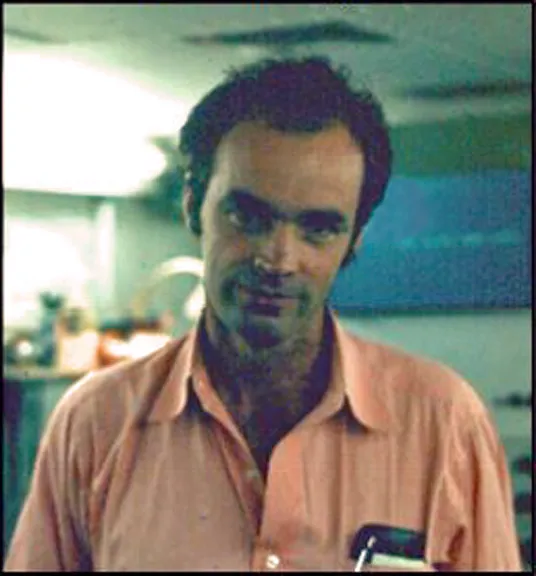
Stirling Colgate and Richard White published computer simulations in which the collapse of a massive stellar core releases most of its gravitational binding energy as neutrinos. They proposed that these neutrinos deposit energy in the outer layers and drive the explosion. Although their specific mechanism proved too simple, the central role of neutrinos in core-collapse supernovae was confirmed by the neutrino burst of SN 1987A.
- Date
- 1966
- Kind of event
- Theory
- People involved
- Stirling Auchincloss Colgate, Richard H. White
The situation before
Since the work of Walter Baade and Fritz Zwicky in the 1930s, astronomers had suspected that some supernovae occur when the core of a massive star collapses into a neutron star. The collapse releases an enormous amount of gravitational energy, about 10⁵³ erg, far more than the visible explosion. How a small part of that energy is transferred to the outer layers to blow them off was unknown. In the early 1960s it also became clear that a hot, collapsing core would produce neutrinos copiously, and that they might carry away almost all of the energy.
What happened
Stirling Colgate and Richard H. White at the Lawrence Radiation Laboratory in Livermore applied the hydrodynamics codes developed for nuclear weapons to a collapsing stellar core. Their paper "The hydrodynamic behavior of supernovae explosions", published in The Astrophysical Journal in 1966, followed the collapse to neutron-star densities. In their calculations most of the released energy emerged as neutrinos from the hot, dense centre. They proposed that a small fraction of these neutrinos is absorbed in the infalling stellar mantle, heating it and driving a shock that ejects the envelope. In this picture neutrinos are not just a by-product of the supernova mechanism but its engine.
W. David Arnett published related calculations at about the same time. The work by Colgate and White is generally cited as the first to place neutrino energy transport at the centre of core-collapse supernovae.
Reaction
The proposal was influential but soon ran into difficulties. In the 1970s it became clear that neutrinos are trapped in the dense core for seconds and leak out from a neutrinosphere rather than streaming out instantly, which weakened the prompt energy deposition Colgate and White had assumed. The discovery of neutral currents in 1973 added coherent scattering on nuclei, which further increased trapping. Attention shifted for a time to a purely hydrodynamic "prompt shock", but this shock was found to stall.
In 1985 Hans Bethe and James R. Wilson showed that the stalled shock can be revived by neutrino heating over a few hundred milliseconds, the delayed neutrino mechanism. This is a refined form of the idea Colgate and White had introduced.
Why it matters
The central claim of 1966, that a core collapse releases its energy mainly as neutrinos, was confirmed on 23 February 1987, when Kamiokande, IMB and the Baksan detector recorded about two dozen neutrinos from SN 1987A within about 13 seconds. The energy and duration of the burst matched the expectation for a forming neutron star. Today, three-dimensional simulations by groups such as that of Hans-Thomas Janka produce explosions driven by neutrino heating aided by turbulence. Supernova neutrinos are among the main targets of large detectors and of the SNEWS alert network.
Frequently asked questions
Who first proposed that neutrinos drive supernova explosions?
Stirling Colgate and Richard White, in a 1966 paper in The Astrophysical Journal.
Was their mechanism correct?
Not in detail. Neutrinos are trapped longer than they assumed. A delayed form of neutrino heating, proposed by Bethe and Wilson in 1985, is now the leading explanation.
How was the role of neutrinos confirmed?
By the neutrino burst from SN 1987A, detected in 1987 by Kamiokande, IMB and Baksan.
Original papers
- TheoryS. A. Colgate and R. H. White, The Hydrodynamic Behavior of Supernovae Explosions, Astrophys. J. 143, 626 (1966)DOI 10.1086/148549
Concepts
Mentioned in 1 page
Lessons 1
Last updated: · Editorial standard
Cite this page
Text
Neutrino Atlas (2026). “1966: Neutrinos proposed to drive supernova explosions”. Retrieved 22 November 2026, from https://neutrino-atlas.com/timeline/1966-colgate-white-supernova/BibTeX
@misc{neutrinoatlas2026966colgatewhitesupernova,
  title        = {1966: Neutrinos proposed to drive supernova explosions},
  author       = {{Neutrino Atlas}},
  year         = {2026},
  url          = {https://neutrino-atlas.com/timeline/1966-colgate-white-supernova/},
  note         = {Accessed 2026-11-22},
  language     = {english}
}