1967Theory
Weinberg's 'A Model of Leptons'
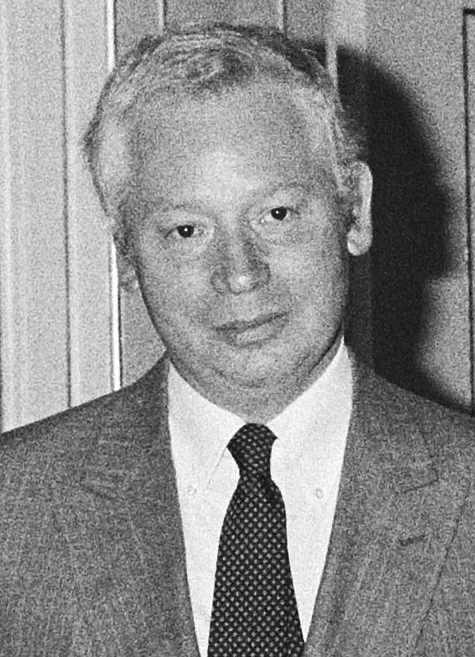
Steven Weinberg combined Sheldon Glashow's 1961 SU(2)×U(1) gauge structure with the Higgs mechanism to produce a unified theory of weak and electromagnetic interactions; Abdus Salam proposed the same model independently in 1968. The theory predicted massive W and Z bosons and weak neutral currents, in which neutrinos scatter without changing into charged leptons. In its original form neutrinos were massless. It became the electroweak part of the Standard Model.
- Date
- 20 November 1967
- Kind of event
- Theory
- People involved
- Steven Weinberg, Sheldon Lee Glashow, Abdus Salam
The situation before
By the mid-1960s the V−A form of the weak interaction described low-energy data well, but as a fundamental theory it failed: at high energies its cross-sections grew without bound, and attempts to make it consistent with quantum mechanics ran into infinities. A heavy charged boson carrying the force would soften the problem, but a theory of massive force carriers seemed impossible to make consistent. In 1961 Sheldon Glashow had proposed a gauge symmetry SU(2)×U(1) uniting the weak and electromagnetic interactions, with charged W bosons, a neutral Z and the photon, but he had to put the boson masses in by hand. Separately, in 1964, Peter Higgs, François Englert, Robert Brout and others had shown how a gauge symmetry can be broken spontaneously so that force carriers acquire mass.
What happened
Steven Weinberg, then visiting MIT, combined the two ideas. In a paper of less than three pages, "A Model of Leptons", received on 17 October 1967 and published in Physical Review Letters on 20 November 1967, he applied the Higgs mechanism to Glashow's SU(2)×U(1) for the electron and its neutrino. The left-handed electron and neutrino formed a doublet, the right-handed electron a singlet. The scalar field gave masses to the W and Z bosons and to the electron, while the photon stayed massless.
The model made definite predictions. The W and Z masses were related through a single parameter, the weak mixing angle. And the Z boson implied a new kind of weak process: neutral currents, in which a neutrino scatters off matter and remains a neutrino. In the original model the neutrino had no right-handed partner and was therefore massless. Abdus Salam presented the same model independently at a Nobel Symposium in Sweden in 1968.
Reaction
At first the paper attracted almost no attention; Weinberg himself was unsure whether the theory could be made free of infinities. That changed in 1971, when Gerard 't Hooft, building on work with Martinus Veltman, proved that such spontaneously broken gauge theories are renormalisable. Within a few years the paper became one of the most cited in particle physics.
Consequences
The prediction of neutral currents was confirmed in 1973 by the Gargamelle bubble chamber at CERN, using neutrino beams. Glashow, Salam and Weinberg shared the 1979 Nobel Prize in Physics. The W and Z bosons were produced at CERN in 1983, the Higgs boson in 2012. The model is now the electroweak theory of the Standard Model. Its neutrino turned out to be incomplete: oscillation experiments showed that neutrinos have mass, which requires extending the 1967 model, for instance with right-handed neutrinos or the effective Weinberg operator that Weinberg himself proposed in 1979.
Frequently asked questions
What did Weinberg's "A Model of Leptons" propose?
A unified gauge theory of weak and electromagnetic interactions for leptons, in which the Higgs mechanism gives mass to the W and Z bosons. It predicted weak neutral currents.
When was it published?
In Physical Review Letters on 20 November 1967.
Were neutrinos massive in Weinberg's model?
No. The original model had only left-handed neutrinos, which remain massless. Oscillations later showed that the model must be extended.
Original papers
- TheoryS. Weinberg, A Model of Leptons, Phys. Rev. Lett. 19, 1264 (1967)DOI 10.1103/PhysRevLett.19.1264
Concepts
Mentioned in 2 pages
Last updated: · Editorial standard
Cite this page
Text
Neutrino Atlas (2026). “1967: Weinberg's 'A Model of Leptons'”. Retrieved 22 November 2026, from https://neutrino-atlas.com/timeline/1967-weinberg-model-of-leptons/BibTeX
@misc{neutrinoatlas202667weinbergmodelofleptons,
  title        = {1967: Weinberg's 'A Model of Leptons'},
  author       = {{Neutrino Atlas}},
  year         = {2026},
  url          = {https://neutrino-atlas.com/timeline/1967-weinberg-model-of-leptons/},
  note         = {Accessed 2026-11-22},
  language     = {english}
}