1966Theory
Cosmology bounds the neutrino mass
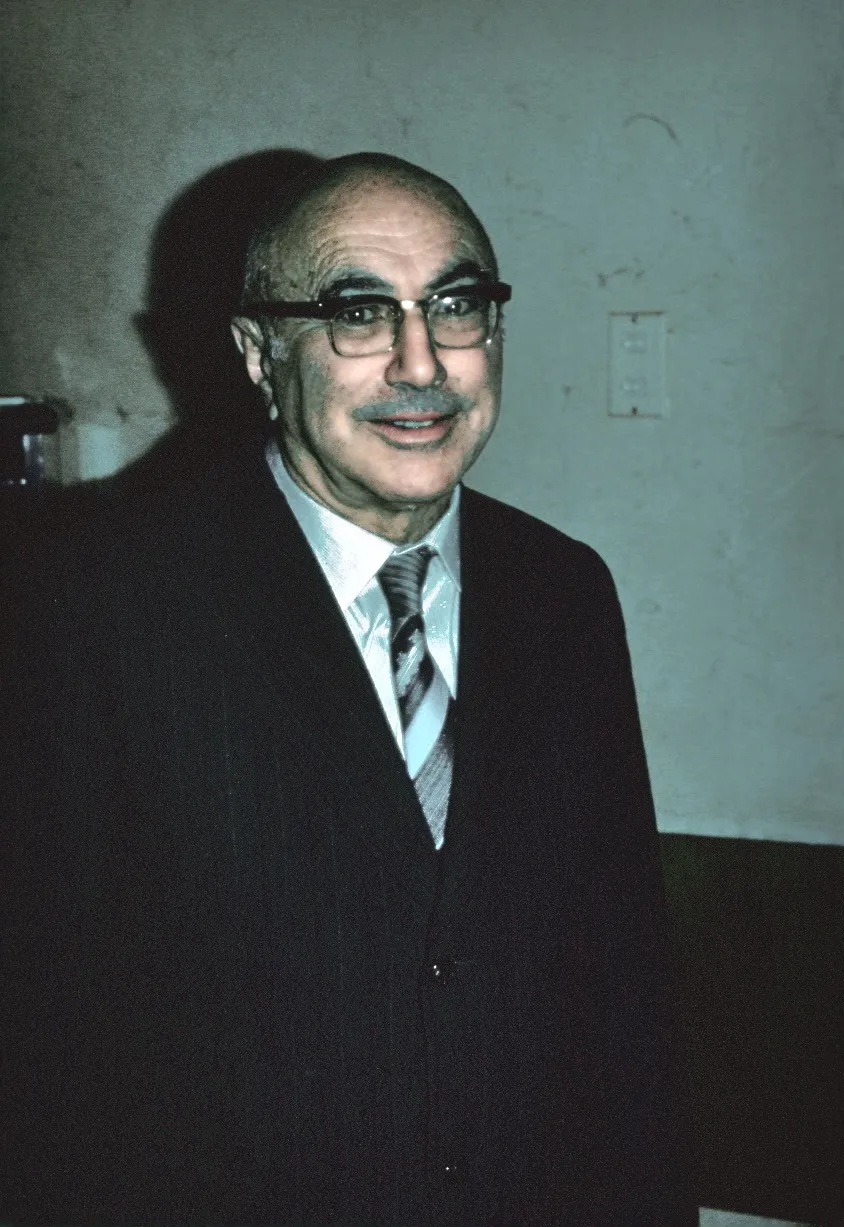
Semyon Gershtein and Yakov Zeldovich noted that the Big Bang should have left a background of relic neutrinos, and that their total mass cannot exceed what the observed expansion of the Universe allows. This gave an upper limit on the sum of neutrino masses independent of laboratory experiments. Ramanath Cowsik and John McClelland sharpened the argument in 1972. Cosmology now provides the tightest, though model-dependent, bounds on the neutrino mass sum.
- Date
- 1966
- Kind of event
- Theory
- People involved
- Semyon Solomonovich Gershtein, Yakov Borisovich Zeldovich, Ramanath Cowsik
The situation before
In the mid-1960s laboratory limits on neutrino masses were weak. Tritium beta decay constrained the electron neutrino to below a few hundred electronvolts, and the limit on the muon neutrino from pion decay was far weaker still, around a million electronvolts. At the same time cosmology was changing rapidly. The discovery of the cosmic microwave background in 1965 by Arno Penzias and Robert Wilson made the hot Big Bang the standard picture, and with it came the expectation that the early Universe was filled with particles of all kinds in thermal equilibrium.
What happened
In 1966 Semyon Gershtein and Yakov Zeldovich in Moscow published a short note in JETP Letters titled "Rest mass of muonic neutrino and cosmology". Their reasoning was simple. If the Universe was once hot, neutrinos were produced in equilibrium and then decoupled when it cooled, leaving a relic neutrino background with a number density comparable to that of the photons, roughly a hundred per cubic centimetre for each type. If the neutrinos have mass, this background contributes to the mass density of the Universe. Since the observed expansion rate and age of the Universe limit the total density, the neutrino mass cannot be too large.
Using the cosmological data of the time, they concluded that the masses of the electron and muon neutrinos must each be less than about 400 eV. For the muon neutrino this was an improvement of more than three orders of magnitude over the laboratory limit, obtained without any experiment on neutrinos at all.
Reaction
The note was not widely noticed outside the Soviet Union at first. In 1972 Ramanath Cowsik and John McClelland at the University of California, Berkeley, independently derived the argument in Physical Review Letters and obtained a limit of about 8 eV for a single neutrino species, using a more precise estimate of the density. The argument, now usually called the Gershtein–Zeldovich or Cowsik–McClelland bound, became a standard part of particle cosmology. It also raised the opposite possibility: neutrinos with masses of a few tens of electronvolts would make up much of the dark matter. Around 1980, encouraged by a claimed laboratory measurement of the electron-neutrino mass, this hot dark matter idea was briefly popular, until simulations of structure formation showed that fast-moving neutrinos smooth out galaxies too much.
Why it matters
The 1966 note opened a line of research in which the Universe acts as a neutrino-mass laboratory. Modern bounds use not only the total density but also the way massive neutrinos suppress the growth of structure through free streaming and shift the pattern of the cosmic microwave background. Data from the Planck satellite combined with galaxy surveys limit the sum of neutrino masses to below roughly 0.1 eV, and recent results from the DESI survey push it lower still. These are the tightest limits available, but they depend on the assumed cosmological model, which is why direct laboratory measurements such as KATRIN remain essential. Oscillation experiments require the sum to be at least about 0.06 eV, so cosmology is now close to detecting the neutrino mass rather than just bounding it.
Frequently asked questions
Who first used cosmology to limit the neutrino mass?
Semyon Gershtein and Yakov Zeldovich, in a 1966 note in JETP Letters.
What limit did they obtain?
About 400 eV for each of the electron and muon neutrinos. Cowsik and McClelland improved it to about 8 eV in 1972.
What is the cosmological limit today?
Below roughly 0.1 eV for the sum of the three neutrino masses, depending on the data and the cosmological model used.
Original papers
- TheoryS. S. Gershtein and Ya. B. Zeldovich, Rest Mass of Muonic Neutrino and Cosmology, Pis'ma Zh. Eksp. Teor. Fiz. 4, 174 (1966) [JETP Lett. 4, 120 (1966)]
- TheoryR. Cowsik and J. McClelland, An Upper Limit on the Neutrino Rest Mass, Phys. Rev. Lett. 29, 669 (1972)DOI 10.1103/PhysRevLett.29.669
Concepts
Mentioned in 2 pages
Last updated: · Editorial standard
Cite this page
Text
Neutrino Atlas (2026). “1966: Cosmology bounds the neutrino mass”. Retrieved 22 November 2026, from https://neutrino-atlas.com/timeline/1966-cosmological-mass-bound/BibTeX
@misc{neutrinoatlas2026966cosmologicalmassbound,
  title        = {1966: Cosmology bounds the neutrino mass},
  author       = {{Neutrino Atlas}},
  year         = {2026},
  url          = {https://neutrino-atlas.com/timeline/1966-cosmological-mass-bound/},
  note         = {Accessed 2026-11-22},
  language     = {english}
}