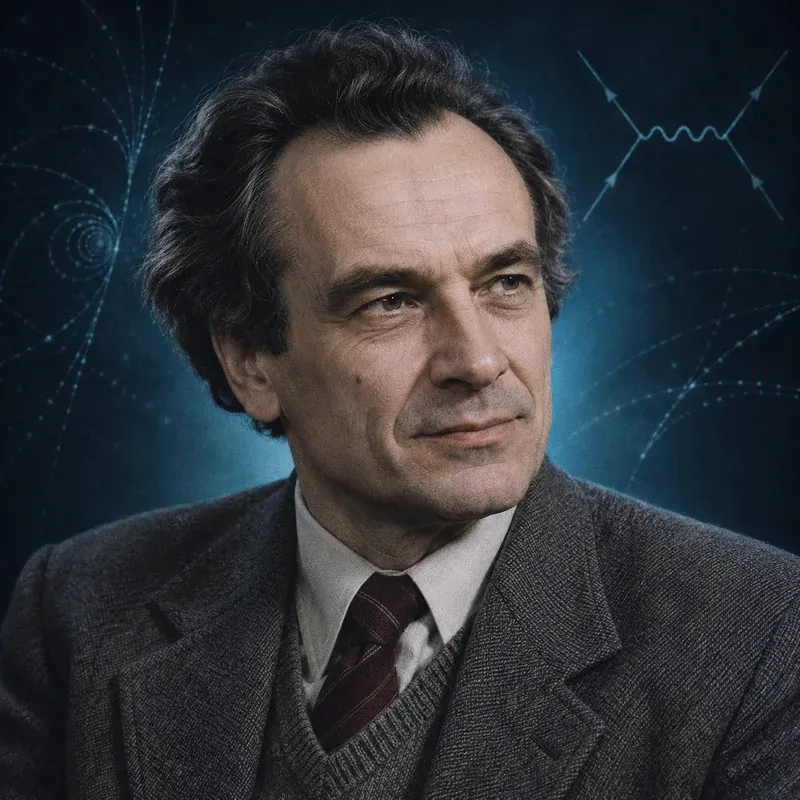
 Illustration
Vladimir Mikhailovich Lobashev
With P. E. Spivak, Lobashev proposed a new spectrometer method for measuring the neutrino mass in tritium decay. His Troitsk-NM experiment measured the endpoint of the tritium beta spectrum and, together with Mainz, set the best upper limit on the electron antineutrino mass (about 2 eV). This technique became the basis of KATRIN.
- Born
- 29 July 1934
Leningrad, Soviet Union - Died
- 3 August 2011
- Nationality
- Soviet / Russian
- Field
- Experimental nuclear and neutrino physics
- Institutions
- Ioffe Physical-Technical Institute, Leningrad Institute of Nuclear Physics, Institute for Nuclear Research (INR), Moscow/Troitsk
Early life and education
Vladimir Mikhailovich Lobashev was born on 29 July 1934 in Leningrad, the son of a professor of physiology and genetics. He graduated in physics from Leningrad State University in 1957. He then joined the Ioffe Physical-Technical Institute in Leningrad, where he rose from laboratory assistant to laboratory head. His candidate's thesis followed in 1963 and his doctoral thesis in 1968, on parity non-conservation in the gamma decay of nuclei.
Parity violation and neutron physics
Lobashev's early fame came from measuring tiny effects of the weak interaction inside atomic nuclei, where it competes with the far stronger nuclear force. He detected the circular polarization of gamma rays emitted by nuclei, a signature of parity violation in nuclear forces, and measured left–right asymmetries in neutron capture using polarized thermal neutrons. These results helped establish the universality of the weak interaction and earned him the Lenin Prize in 1974. He also led some of the most precise measurements of the neutron electric dipole moment and lifetime of his time. He was elected a corresponding member of the USSR Academy of Sciences in 1970 and a full member of the Russian Academy of Sciences in 2003.
Path to neutrino mass
In 1972 Lobashev moved to the new Institute for Nuclear Research (INR) of the Academy of Sciences, near Moscow in Troitsk, as head of its Department of Experimental Physics, and helped design the high-intensity beam complex of the Moscow Meson Factory. In the 1980s the question of neutrino mass became urgent after a group at ITEP led by Valentin Lyubimov claimed a non-zero electron-antineutrino mass from tritium beta decay.
Key contributions
Together with P. E. Spivak, Lobashev proposed in the mid-1980s an integrating electrostatic spectrometer with adiabatic magnetic guiding. Electrons from the tritium source spiral along magnetic field lines into a region where the field drops by orders of magnitude, so their motion is converted into motion along the field. An electrostatic barrier then lets through only electrons above a set energy. The same principle was developed independently in Mainz and is now called a MAC-E filter. It combines a very large acceptance with an energy resolution of a few electronvolts.
The Troitsk ν-mass experiment combined such a spectrometer with a windowless gaseous tritium source, avoiding the solid-state effects of bound sources. It studied the shape of the spectrum near the endpoint for about two decades. In the late 1990s Troitsk reported a small step-like excess close to the endpoint, of unclear origin. The final analysis, published in 2011, found no significant structure once the thickness of the tritium source was properly accounted for, and gave an upper limit of about 2.1–2.2 eV (95 per cent confidence level, depending on the statistical method) on the effective electron-neutrino mass. Together with the Mainz result of Christian Weinheimer and Ernst Otten, it remained the best direct limit until KATRIN, whose design merged the Troitsk gaseous source with a Mainz-type spectrometer on a far larger scale.
Other work and legacy
With Rashid Djilkibaev, Lobashev proposed MELC, a search for muon-to-electron conversion in nuclei, a form of charged lepton flavour violation. Its idea of capturing pions and muons in graded solenoidal magnetic fields became the basis of the Mu2e experiment at Fermilab. He received the Bruno Pontecorvo Prize in 1998 and the Markov Prize in 2004 for his neutrino-mass measurements. He died on 3 August 2011, aged 77.
Known for
- Troitsk nu-mass experiment
- Electrostatic spectrometer method for neutrino mass (with Spivak)
- Parity violation in nuclear gamma decay
- MELC proposal (forerunner of Mu2e)
- Lenin Prize 1974
- Pontecorvo Prize 1998
Chronology
- 1972Moves to INR, head of Department of Experimental Physics
- 1974Lenin Prize
- 1998Bruno Pontecorvo Prize
- 2004Markov Prize
- 2011Final Troitsk upper limit published
- 2011Dies (3 August)
Original papers
- V. N. Aseev et al., An upper limit on electron antineutrino mass from Troitsk experiment, Phys. Rev. D 84, 112003 (2011)DOI 10.1103/PhysRevD.84.112003
Experiments
Connected people
Frequently asked questions
What did the Troitsk experiment measure?
It measured the shape of the tritium beta spectrum near its endpoint to look for the effect of a neutrino mass. Its final 2011 result set an upper limit of about 2.2 eV on the electron-neutrino mass.
On the timeline
Mentioned in 10 pages
Last updated: · Editorial standard
Cite this page
Text
Neutrino Atlas (2026). “Vladimir Mikhailovich Lobashev”. Retrieved 22 November 2026, from https://neutrino-atlas.com/people/vladimir-lobashev/BibTeX
@misc{neutrinoatlas2026peoplevladimirlobashev,
  title        = {Vladimir Mikhailovich Lobashev},
  author       = {{Neutrino Atlas}},
  year         = {2026},
  url          = {https://neutrino-atlas.com/people/vladimir-lobashev/},
  note         = {Accessed 2026-11-22},
  language     = {english}
}