1937Theory
Majorana: a neutrino could be its own antiparticle
Ettore Majorana published a symmetric theory of the electron and positron showing that a neutral spin-1/2 particle can be described by a real field, making it identical to its own antiparticle. Giulio Racah pointed out the experimental consequences the same year. Whether neutrinos are such Majorana particles or Dirac particles distinct from their antiparticles is still unknown. Searches for neutrinoless double beta decay are the main way to test it.
- Date
- 1937
- Kind of event
- Theory
- People involved
- Ettore Majorana, Giulio Racah
The situation before
Paul Dirac's relativistic equation of 1928 described the electron and, as it turned out, predicted its antiparticle, the positron, discovered in 1932. In Dirac's formulation, however, particle and antiparticle were treated unequally: the positron appeared as a hole in an infinite sea of filled negative-energy states. For a charged particle the distinction between particle and antiparticle is obvious, since they carry opposite charge. For a neutral particle such as Wolfgang Pauli's neutrino, it was not clear that any distinction was needed.
What happened
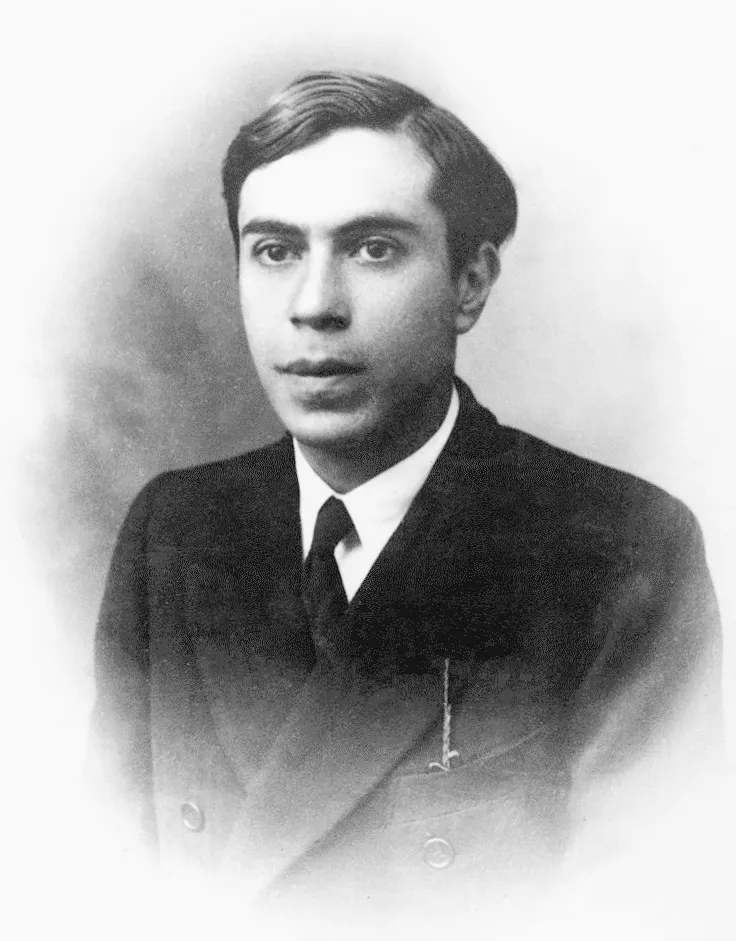
Ettore Majorana, a member of Enrico Fermi's group in Rome who had published little for several years, wrote a paper titled "Teoria simmetrica dell'elettrone e del positrone" ("Symmetric theory of the electron and positron"), published in Il Nuovo Cimento in 1937. He reformulated Dirac's theory so that particle and antiparticle enter on exactly the same footing, without the sea of negative energies. Along the way he showed that for an electrically neutral spin-1/2 particle the equations can be written with a real field. A particle described this way is identical to its own antiparticle.
Majorana noted that this possibility might apply to the neutrino. The paper was written in the year he was appointed professor of theoretical physics in Naples. In March 1938, a few months later, he disappeared during a sea voyage between Naples and Palermo, and his fate has never been established.
Also in 1937, Giulio Racah pointed out in the same journal what such a Majorana neutrino would mean experimentally. A neutrino emitted in one beta decay could then be absorbed by another nucleus in a reaction that produces an electron, which would be impossible if neutrino and antineutrino were distinct particles.
Reaction
The paper drew little attention at first; the question seemed academic while the neutrino had not even been detected. Its impact grew in 1939, when Wendell Furry showed that Majorana neutrinos would allow double beta decay without emitted neutrinos. In the 1950s, experiments such as Raymond Davis's reactor test of 1955 found no sign of antineutrinos acting like neutrinos, but after the discovery of parity violation in 1957 it became clear that this result did not settle the question: the neutrino's fixed handedness would block such reactions even for a Majorana particle, as long as its mass is tiny.
Why it matters
Whether neutrinos are Majorana or Dirac particles is still one of the main open questions in physics, summarised in the Dirac vs. Majorana problem. A Majorana nature would mean that lepton number is not exactly conserved, would offer a natural explanation for the smallness of neutrino masses through the seesaw mechanism, and could link to the origin of the matter-antimatter asymmetry. The decisive test is neutrinoless double beta decay, searched for today by experiments with tonnes of germanium, tellurium and xenon.
Frequently asked questions
What is a Majorana particle?
A spin-1/2 particle that is identical to its own antiparticle. Only electrically neutral particles can have this property; the neutrino is the only known candidate among the elementary fermions.
Do we know whether neutrinos are Majorana particles?
No. The question remains open. Experiments searching for neutrinoless double beta decay are the most sensitive way to find out.
Original papers
- TheoryE. Majorana, Teoria simmetrica dell'elettrone e del positrone, Nuovo Cimento 14, 171 (1937)DOI 10.1007/BF02961314
Concepts
Mentioned in 2 pages
Last updated: · Editorial standard
Cite this page
Text
Neutrino Atlas (2026). “1937: Majorana: a neutrino could be its own antiparticle”. Retrieved 22 November 2026, from https://neutrino-atlas.com/timeline/1937-majorana-theory/BibTeX
@misc{neutrinoatlas2026meline1937majoranatheory,
  title        = {1937: Majorana: a neutrino could be its own antiparticle},
  author       = {{Neutrino Atlas}},
  year         = {2026},
  url          = {https://neutrino-atlas.com/timeline/1937-majorana-theory/},
  note         = {Accessed 2026-11-22},
  language     = {english}
}