1960Theory
Glashow predicts a resonance at 6.3 PeV
Sheldon Glashow pointed out that an electron antineutrino colliding with an atomic electron can resonantly produce the then-hypothetical W boson. With the W mass now known, the resonance occurs at an antineutrino energy of about 6.3 PeV, where the cross-section rises sharply. The process remained unobserved for six decades because no source produced such energies in the laboratory. IceCube reported a candidate event in 2021.
- Date
- 1960
- Kind of event
- Theory
- People involved
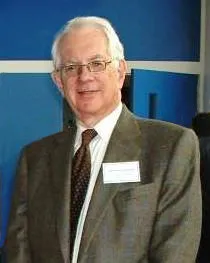
- Sheldon Lee Glashow
The situation before
In 1959 Sheldon Glashow was a young postdoctoral researcher in Copenhagen. Many theorists then assumed that the weak interaction is carried by a heavy charged boson, the hypothetical intermediate vector boson now called the W boson, but its mass was unknown and it had never been produced. Glashow asked whether a neutrino could create such a boson directly.
What happened
In "Resonant scattering of antineutrinos", published in Physical Review in 1960, Glashow pointed out that an electron antineutrino hitting an electron at rest can annihilate with it into a single W⁻ boson. Because the electron is light and almost at rest, this happens only when the antineutrino has a very specific energy, set by the W mass. At that energy the cross-section rises sharply, a resonance, much as a radio responds strongly to one frequency.
Glashow did not know the W mass, so he could not give a number. Only after the W was discovered at CERN in 1983 did the resonance energy become fixed at about 6.3 PeV, or 6.3 million GeV. Near this energy the electron-antineutrino cross-section on electrons exceeds that on nucleons by more than an order of magnitude.
Reaction
The prediction was correct but impossible to test for a long time. No accelerator can produce antineutrinos of PeV energies, and cosmic sources capable of it were unknown. The process became a standard reference point in theoretical work on ultra-high-energy neutrinos, and it is one reason why such neutrinos can, in principle, distinguish antineutrinos from neutrinos: the resonance occurs only for ν̄e.
Consequences
When IceCube began detecting astrophysical neutrinos, the Glashow resonance came within reach. In March 2021 the collaboration reported in Nature a particle shower recorded on 8 December 2016 that deposited about 6.05 PeV in the ice, consistent with the decay of a W boson produced on resonance. Light from early muons in the shower supported a hadronic W decay. The significance was about 2.3 standard deviations, so the event is regarded as a candidate rather than a definitive observation. If confirmed with more events, the resonance offers a way to measure the ratio of antineutrinos to neutrinos from cosmic sources, which helps tell apart proton–photon and proton–proton production mechanisms.
Frequently asked questions
What is the Glashow resonance?
The resonant production of a W⁻ boson when an electron antineutrino of about 6.3 PeV collides with an electron.
When was it predicted?
Sheldon Glashow published the prediction in Physical Review in 1960.
Has it been observed?
IceCube reported a candidate event at about 6 PeV in 2021, recorded in 2016. More events are needed for a definitive observation.
Original papers
- TheoryS. L. Glashow, Resonant Scattering of Antineutrinos, Phys. Rev. 118, 316 (1960)DOI 10.1103/PhysRev.118.316
- DiscoveryIceCube Collaboration (M. G. Aartsen et al.), Detection of a particle shower at the Glashow resonance with IceCube, Nature 591, 220 (2021)DOI 10.1038/s41586-021-03256-1
Concepts
Last updated: · Editorial standard
Cite this page
Text
Neutrino Atlas (2026). “1960: Glashow predicts a resonance at 6.3 PeV”. Retrieved 22 November 2026, from https://neutrino-atlas.com/timeline/1960-glashow-resonance-prediction/BibTeX
@misc{neutrinoatlas2026ashowresonanceprediction,
  title        = {1960: Glashow predicts a resonance at 6.3 PeV},
  author       = {{Neutrino Atlas}},
  year         = {2026},
  url          = {https://neutrino-atlas.com/timeline/1960-glashow-resonance-prediction/},
  note         = {Accessed 2026-11-22},
  language     = {english}
}