1957Theory
Two-component theory of a massless neutrino
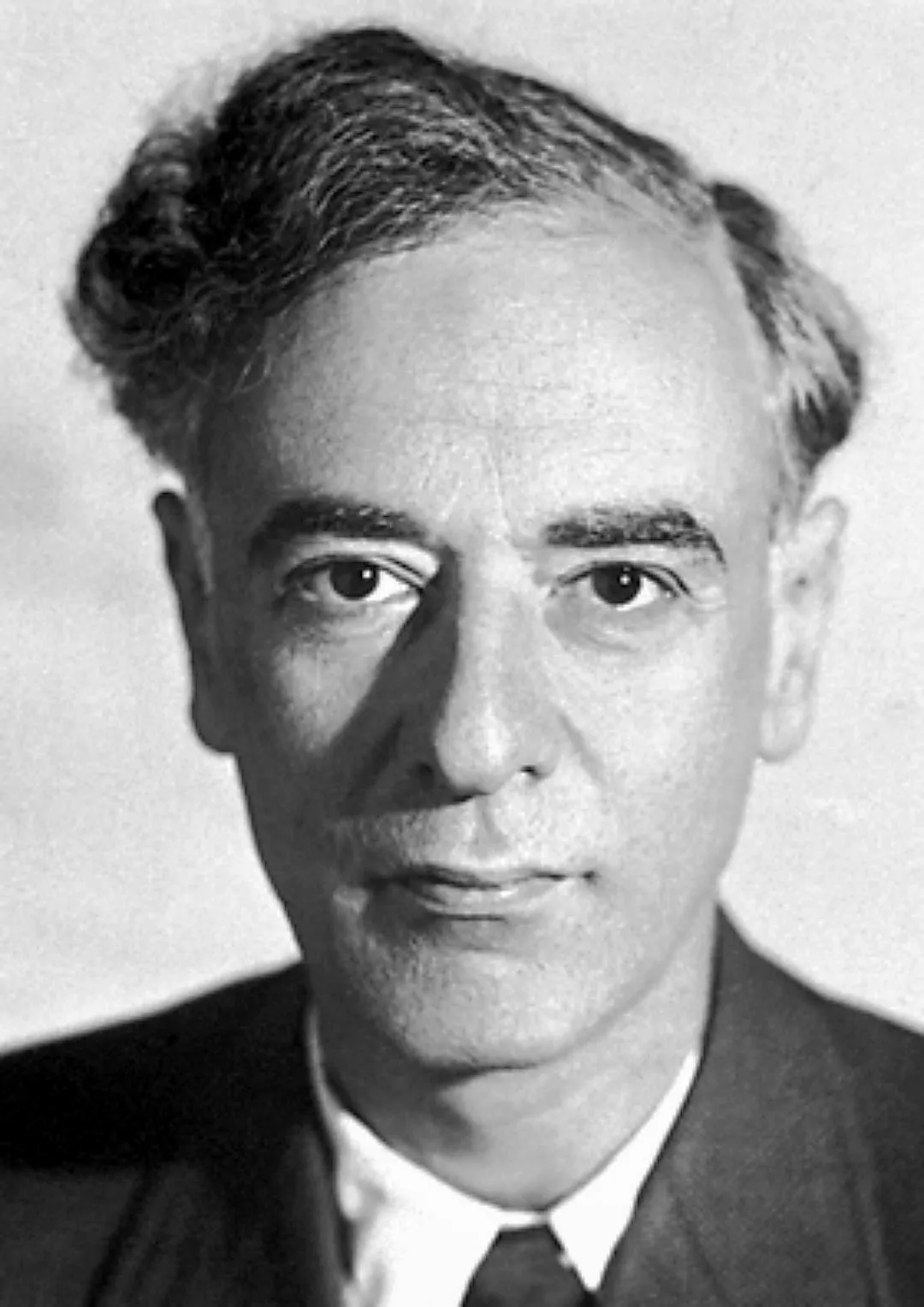
Abdus Salam, Lev Landau, and Tsung-Dao Lee with Chen-Ning Yang independently proposed that the neutrino is a massless two-component particle described by the Weyl equation of 1929. In this picture neutrinos exist only with one helicity and antineutrinos only with the other, which naturally explains maximal parity violation. The theory held until neutrino oscillations showed in 1998 that neutrinos have mass, although the weak interaction still couples only to left-handed neutrinos.
- Date
- 1957
- Kind of event
- Theory
- People involved
- Abdus Salam, Lev Landau, Tsung-Dao Lee, Chen-Ning Yang, Hermann Weyl
The situation before
In 1929 Hermann Weyl had shown that a massless spin-1/2 particle can be described by a simpler equation than Dirac's, using a field with two components instead of four. Such a particle would have a fixed helicity: its spin would always point either along or against its direction of motion. Wolfgang Pauli rejected the Weyl equation in 1933 as physically irrelevant because it is not invariant under mirror reflection. As long as parity was considered an exact symmetry, the idea lay dormant.
What happened
The experiments of January 1957 by Chien-Shiung Wu and by Garwin, Lederman and Weinrich showed that parity is violated in weak interactions, and violated strongly. Within weeks three independent proposals revived Weyl's equation for the neutrino:
- Tsung-Dao Lee and Chen-Ning Yang, "Parity nonconservation and a two-component theory of the neutrino", Physical Review 105 (1957).
- Lev Landau, "On the conservation laws for weak interactions", Nuclear Physics 3 (1957), who argued that the combined operation of mirror reflection and particle-antiparticle exchange remains a symmetry.
- Abdus Salam, "On parity conservation and neutrino mass", Il Nuovo Cimento 5 (1957).
All three described the neutrino as massless with only one helicity, and the antineutrino with the opposite one. A neutrino seen in a mirror would have the wrong handedness and therefore does not exist, so parity violation is built into the particle itself and is maximal. The theory left open which helicity nature had chosen.
The test
The answer came from a clever experiment at Brookhaven by Maurice Goldhaber, Lee Grodzins and Andrew Sunyar, published in the Physical Review in 1958. They used electron capture in europium-152, which emits a neutrino and leaves a samarium nucleus that then emits a gamma ray. By selecting gamma rays emitted opposite to the neutrino and measuring their circular polarisation with magnetised iron, they inferred the neutrino's helicity. It was negative: the neutrino is left-handed. The same year the V−A theory of weak interactions incorporated this result.
Why it matters
The two-component theory held for four decades and was written into the Standard Model, where the neutrino was massless and only left-handed. In 1998 neutrino oscillations showed that neutrinos have mass, so helicity cannot be strictly fixed for them. What survived is the statement about chirality: the weak interaction couples only to left-chiral neutrinos and right-chiral antineutrinos. Whether a right-handed partner exists, as a sterile particle or as part of a seesaw mechanism, is an open question.
Frequently asked questions
What is the two-component neutrino theory?
The 1957 proposal that the neutrino is massless and exists only with one helicity, the antineutrino only with the other. It explained why parity violation in weak interactions is maximal.
Is the theory still valid?
Not exactly, since neutrinos have small masses. But the weak interaction still involves only left-chiral neutrinos, the core of the idea.
Original papers
- TheoryT. D. Lee and C. N. Yang, Parity Nonconservation and a Two-Component Theory of the Neutrino, Phys. Rev. 105, 1671 (1957)DOI 10.1103/PhysRev.105.1671
- TheoryL. Landau, On the conservation laws for weak interactions, Nucl. Phys. 3, 127 (1957)DOI 10.1016/0029-5582(57)90061-5
- TheoryA. Salam, On parity conservation and neutrino mass, Nuovo Cimento 5, 299 (1957)DOI 10.1007/BF02812841
Concepts
Mentioned in 1 page
Lessons 1
Last updated: · Editorial standard
Cite this page
Text
Neutrino Atlas (2026). “1957: Two-component theory of a massless neutrino”. Retrieved 22 November 2026, from https://neutrino-atlas.com/timeline/1957-two-component-neutrino/BibTeX
@misc{neutrinoatlas20261957twocomponentneutrino,
  title        = {1957: Two-component theory of a massless neutrino},
  author       = {{Neutrino Atlas}},
  year         = {2026},
  url          = {https://neutrino-atlas.com/timeline/1957-two-component-neutrino/},
  note         = {Accessed 2026-11-22},
  language     = {english}
}