1960Experiment
Proposals for accelerator neutrino beams
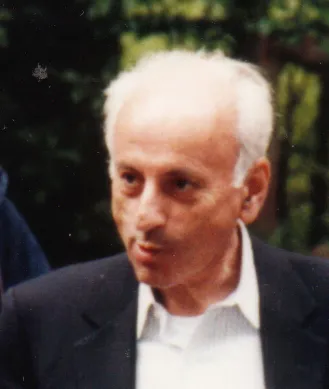
Bruno Pontecorvo in 1959 and Melvin Schwartz in a 1960 Physical Review Letters paper proposed producing neutrino beams from the decay of pions created by high-energy protons. Such beams would test whether neutrinos from pion decay are the same as those from beta decay. T. D. Lee and Yang discussed the theory of high-energy neutrino experiments the same year. The idea led directly to the 1962 Brookhaven two-neutrino experiment and to all later accelerator neutrino programmes.
- Date
- 1960
- Kind of event
- Experiment
- People involved
- Bruno Pontecorvo, Melvin Schwartz, Tsung-Dao Lee
The situation before
By the late 1950s neutrinos had been detected only once, at a nuclear reactor by Clyde Cowan and Frederick Reines, and only at energies of a few MeV. At such energies the neutrino cross-section is tiny, so studying the weak interaction in detail with neutrinos seemed out of reach. Two puzzles were nevertheless pressing. Theorists wanted to know how the weak interaction behaves at high energy, where Fermi's contact theory predicted cross-sections that grow without limit. And the decay of the muon into an electron and a photon had never been seen, although it should occur if only one kind of neutrino existed. This hinted that the neutrino accompanying the muon might be different from the one in beta decay.
What happened
In 1959 Bruno Pontecorvo, working in Dubna, published a paper in the Soviet Journal of Experimental and Theoretical Physics asking whether the neutrino from pion decay is the same as the one from beta decay, and proposing to answer the question with neutrinos from pions produced at a proton accelerator. He estimated that existing machines could produce a detectable flux.
Independently, Melvin Schwartz at Columbia University arrived at the same idea after a discussion over coffee with Tsung-Dao Lee and others about how to study weak interactions at high energy. His short paper "Feasibility of using high-energy neutrinos to study the weak interactions" appeared in Physical Review Letters in March 1960. The concept was simple: a high-energy proton beam hits a target and produces pions; the pions fly through an empty decay region and decay into muons and neutrinos; a thick shield then stops everything except the neutrinos, which continue into a large detector. In the same issue, Lee and Chen-Ning Yang discussed the theoretical questions such experiments could answer, including the existence of an intermediate boson and whether there are two kinds of neutrino.
Because the neutrino cross-section rises roughly in proportion to energy, neutrinos of around a GeV interact hundreds of times more readily than reactor neutrinos. Schwartz estimated that the new Alternating Gradient Synchrotron under construction at Brookhaven would give enough neutrinos for a detector of a few tons to see a usable number of events.
Reaction and consequences
The proposal was taken up at once. Schwartz, Leon Lederman and Jack Steinberger built the experiment at Brookhaven, and in 1962 their two-neutrino experiment showed that neutrinos from pion decay produce muons, not electrons: the muon neutrino was a separate particle. The three received the 1988 Nobel Prize in Physics "for the neutrino beam method" and that discovery.
Every accelerator neutrino programme since then uses the scheme of 1959–60, improved by magnetic horns that focus the pions. It led to the CERN bubble-chamber programme and the discovery of neutral currents in 1973, to deep-inelastic studies of nucleon structure, and to today's long-baseline experiments such as T2K, NOvA and DUNE.
Frequently asked questions
Who proposed accelerator neutrino beams?
Bruno Pontecorvo in 1959 and, independently, Melvin Schwartz in a 1960 Physical Review Letters paper.
How does an accelerator neutrino beam work?
Protons hit a target and produce pions, which decay in flight into muons and neutrinos. A thick shield absorbs everything except the neutrinos, which then reach the detector.
What did the proposal lead to?
The 1962 Brookhaven experiment that discovered the muon neutrino, and later to all accelerator neutrino experiments.
Original papers
- ProposalM. Schwartz, Feasibility of Using High-Energy Neutrinos to Study the Weak Interactions, Phys. Rev. Lett. 4, 306 (1960)DOI 10.1103/PhysRevLett.4.306
- TheoryT. D. Lee and C. N. Yang, Theoretical Discussions on Possible High-Energy Neutrino Experiments, Phys. Rev. Lett. 4, 307 (1960)DOI 10.1103/PhysRevLett.4.307
- ProposalB. Pontecorvo, Electron and muon neutrinos, Zh. Eksp. Teor. Fiz. 37, 1751 (1959) [Sov. Phys. JETP 10, 1236 (1960)]
Concepts
Mentioned in 1 page
Last updated: · Editorial standard
Cite this page
Text
Neutrino Atlas (2026). “1960: Proposals for accelerator neutrino beams”. Retrieved 22 November 2026, from https://neutrino-atlas.com/timeline/1960-accelerator-neutrino-proposal/BibTeX
@misc{neutrinoatlas2026eleratorneutrinoproposal,
  title        = {1960: Proposals for accelerator neutrino beams},
  author       = {{Neutrino Atlas}},
  year         = {2026},
  url          = {https://neutrino-atlas.com/timeline/1960-accelerator-neutrino-proposal/},
  note         = {Accessed 2026-11-22},
  language     = {english}
}