Brookhaven Two-Neutrino Experiment
The 1962 experiment that showed the muon neutrino is distinct from the electron neutrino.
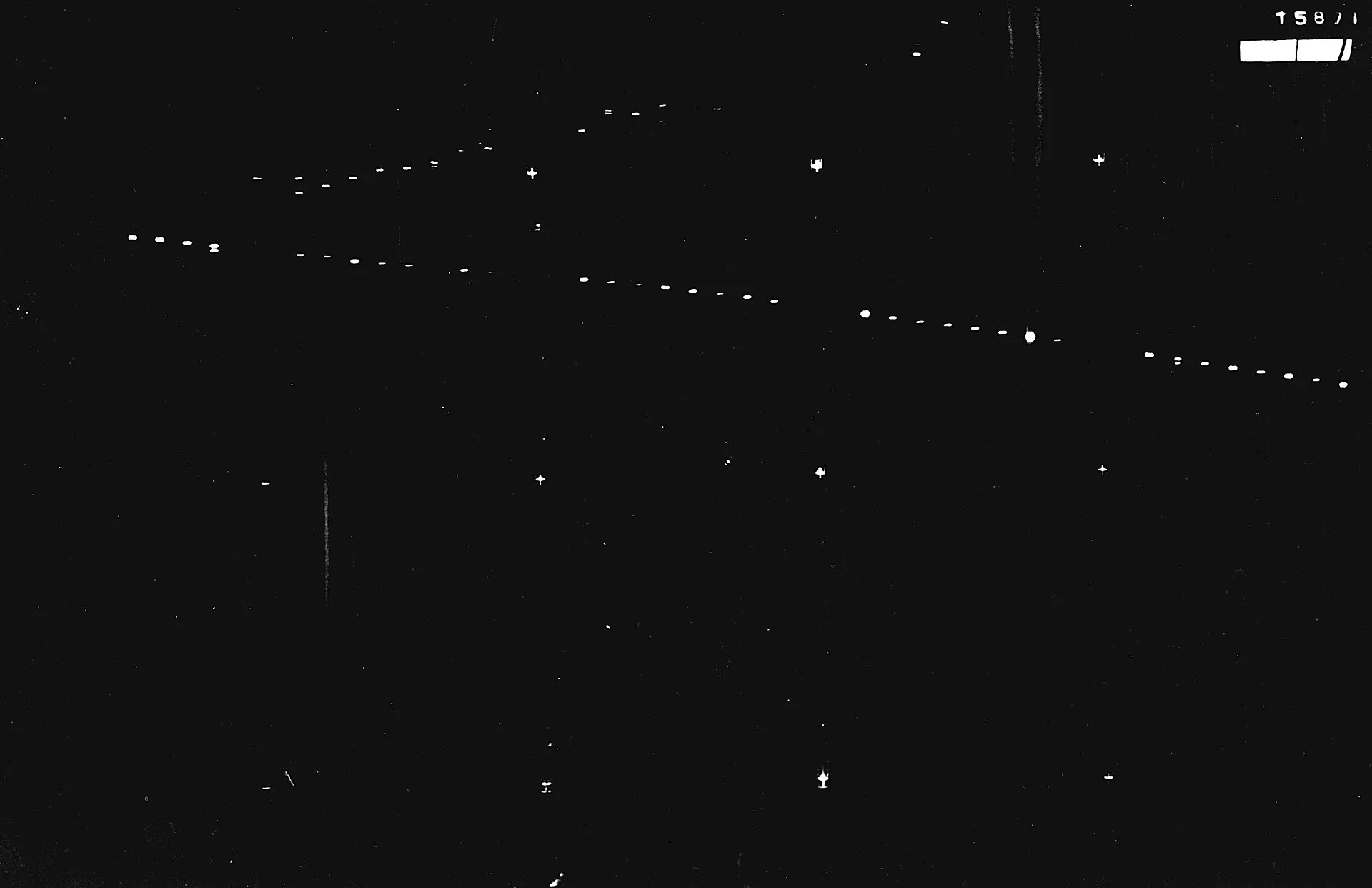
Leon Lederman, Melvin Schwartz and Jack Steinberger used neutrinos from pion decays at the AGS accelerator and a 10-tonne spark chamber. The neutrinos produced muons but not electrons, proving a second neutrino flavour. This was the first accelerator neutrino beam experiment and earned the 1988 Nobel Prize.
Compare all experiments → · World map →
In plain words
By 1960 physicists knew that a neutrino accompanies the electron in beta decay and that a neutrino also appears when a pion decays into a muon. Nobody knew whether these were the same particle. The Brookhaven experiment answered the question with a simple test: make a beam of neutrinos that were born together with muons, send them into a heavy detector, and see which charged particle they produce when they interact. If there were only one kind of neutrino, electrons and muons should appear about equally often. Instead, the detector saw muons.
In detail
The experiment was proposed after Melvin Schwartz realised in 1959 that the decay of high-energy pions could produce a usable neutrino beam; Bruno Pontecorvo had independently suggested a similar test. A theoretical motivation was the missing decay μ → e γ: if the two neutrinos were identical, this process should have been seen at a measurable rate.
At the Alternating Gradient Synchrotron, 15 GeV protons struck a beryllium target. The pions flew about 21 metres and decayed, and a 13.5-metre wall of steel, partly cut from old battleship armour plate, stopped everything except neutrinos. Behind it stood a 10-tonne spark chamber built from aluminium plates. A muon left a long straight track through many plates, while an electron would have produced a short, branching shower.
Key results
Over about eight months of running in 1961 and 1962, the team recorded several dozen neutrino interactions with clean, penetrating muon tracks and only a few shower-like candidates consistent with background. The paper by G. Danby, J.-M. Gaillard, K. Goulianos, Leon Lederman, N. Mistry, Schwartz and Jack Steinberger appeared in Physical Review Letters in July 1962. It established the muon neutrino as distinct from the electron neutrino and showed that lepton flavour is a meaningful quantum number.
Why it matters for neutrino physics
The result introduced the idea of lepton generations, later extended by the tau neutrino, and it launched accelerator neutrino physics. Lederman, Schwartz and Steinberger received the 1988 Nobel Prize in Physics for the neutrino beam method and the discovery.
Frequently asked questions
Why did the experiment need such a thick steel shield?
The beam contained many pions, muons and other particles besides neutrinos. Only neutrinos can pass through 13.5 metres of steel, so the shield ensured that any interaction in the spark chamber was caused by a neutrino.
Original papers
- DiscoveryG. Danby et al., Observation of High-Energy Neutrino Reactions and the Existence of Two Kinds of Neutrinos, Phys. Rev. Lett. 9, 36 (1962)DOI 10.1103/PhysRevLett.9.36
Related terms
People
On the timeline
Mentioned in 27 pages
Lessons 1
Milestones 4
People 14
Last updated: · Editorial standard
Cite this page
Text
Neutrino Atlas (2026). “Brookhaven Two-Neutrino Experiment”. Retrieved 22 November 2026, from https://neutrino-atlas.com/terms/bnl-two-neutrino/BibTeX
@misc{neutrinoatlas2026termsbnltwoneutrino,
  title        = {Brookhaven Two-Neutrino Experiment},
  author       = {{Neutrino Atlas}},
  year         = {2026},
  url          = {https://neutrino-atlas.com/terms/bnl-two-neutrino/},
  note         = {Accessed 2026-11-22},
  language     = {english}
}