CUPID-Mo
Demonstrator at Modane that ran 20 Li₂¹⁰⁰MoO₄ scintillating bolometers in 2019–2020 and set T½(¹⁰⁰Mo, 0νββ) > 1.8 × 10²⁴ yr.
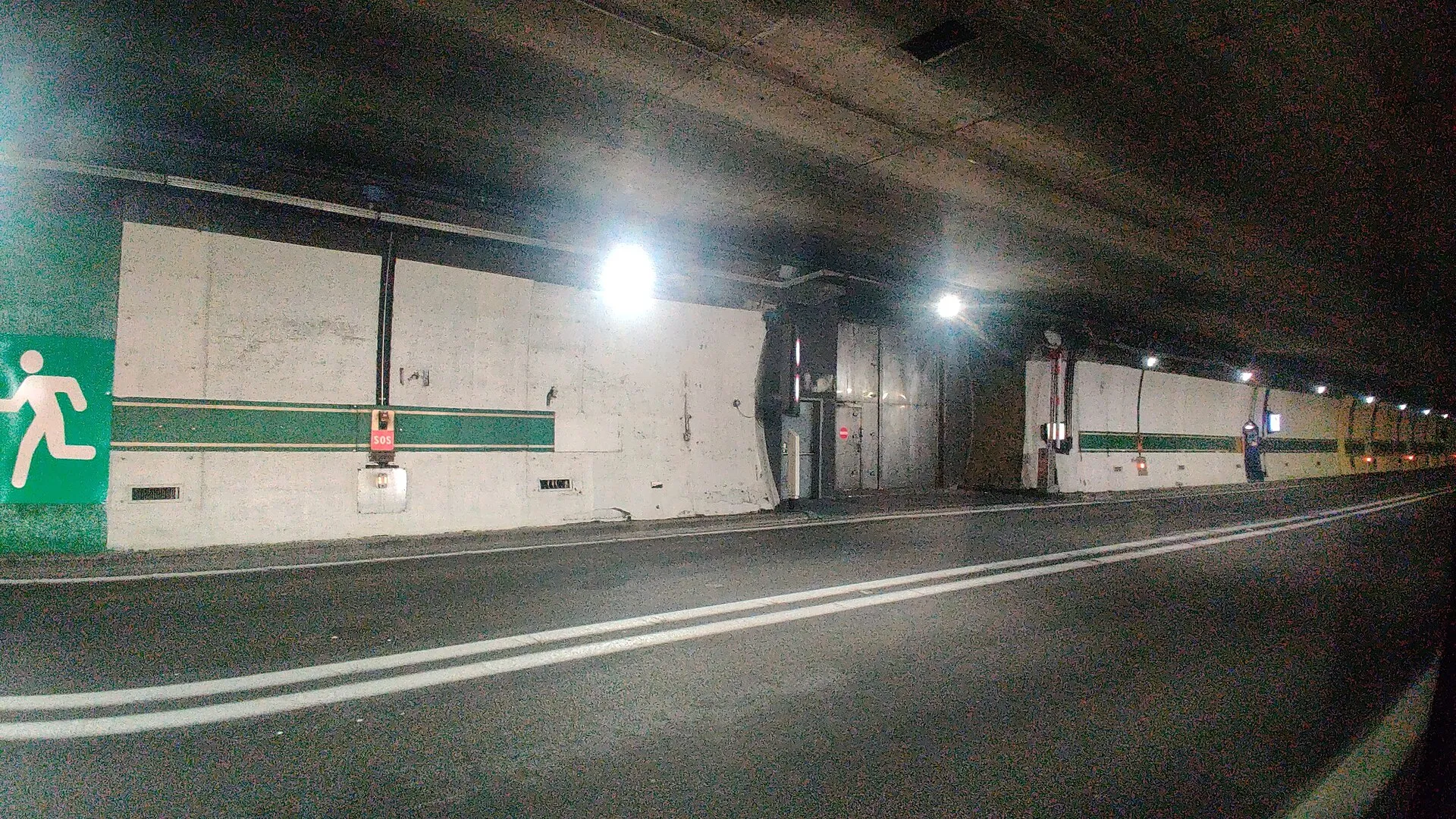
CUPID-Mo operated 20 lithium molybdate crystals enriched in ¹⁰⁰Mo, about 0.2 kg each, at roughly 20 mK in the EDELWEISS cryostat at the Laboratoire Souterrain de Modane. Germanium light detectors next to each crystal separated alpha particles from beta/gamma events. With 1.47 kg·yr of ¹⁰⁰Mo exposure and zero events in the region of interest, it set mββ < 0.28–0.49 eV.
Compare all experiments → · World map →
In plain words
CUPID is the planned successor of CUORE, meant to search for neutrinoless double beta decay with far less background. Before building a tonne-scale detector, the collaboration needed proof that its chosen crystals work. CUPID-Mo was that test: a small array of crystals that both heat up and glow when a particle deposits energy, so that the two signals together reveal what kind of particle it was.
How the detector works
Each of the 20 crystals of lithium molybdate, Li₂MoO₄, was enriched in the isotope ¹⁰⁰Mo and weighed about 0.2 kg. Cooled to about 20 mK, a crystal acts as a bolometer: energy from a decay raises its temperature by a tiny, measurable amount. At the same time the crystal scintillates, and a thin germanium light detector next to it records that light. Alpha particles from surface contamination produce much less light than electrons of the same energy, so they can be rejected, the main background limitation of CUORE. The ¹⁰⁰Mo decay energy of about 3,034 keV also lies above most natural gamma lines. The array ran inside the EDELWEISS dark-matter cryostat in the Modane underground laboratory.
Key results
Over about 1.5 years in 2019 and 2020, CUPID-Mo collected 1.47 kg·yr of ¹⁰⁰Mo exposure. The final analysis found zero events in the region of interest and set T½ > 1.8 × 10²⁴ years at 90% credibility, corresponding to an effective Majorana mass below 0.28 to 0.49 eV depending on the nuclear matrix element. The detectors also achieved almost complete alpha rejection and good energy resolution, which led the collaboration to adopt Li₂¹⁰⁰MoO₄ as the CUPID baseline.
Frequently asked questions
Why was CUPID-Mo run in Modane instead of Gran Sasso?
An existing low-background cryostat, that of the EDELWEISS experiment, was available at Modane and could host the crystals quickly.
Is CUPID-Mo competitive with large experiments?
Its limit is weaker than those of KamLAND-Zen or LEGEND, but it was the best for ¹⁰⁰Mo at the time.
Original papers
- First resultE. Armengaud et al. (CUPID-Mo Collaboration), New Limit for Neutrinoless Double-Beta Decay of 100Mo from the CUPID-Mo Experiment, Phys. Rev. Lett. 126, 181802 (2021)DOI 10.1103/PhysRevLett.126.181802arXiv:2011.13243
- Final resultC. Augier et al. (CUPID-Mo Collaboration), Final results on the 0νββ decay half-life limit of 100Mo from the CUPID-Mo experiment, Eur. Phys. J. C 82, 1033 (2022)arXiv:2202.08716
Related terms
- CUPID
- Cryogenic bolometers
- Neutrinoless double beta decay
- Effective Majorana mass
- Laboratoire Souterrain de Modane (LSM)
Mentioned in 2 pages
Last updated: · Editorial standard
Cite this page
Text
Neutrino Atlas (2026). “CUPID-Mo”. Retrieved 22 November 2026, from https://neutrino-atlas.com/terms/cupid-mo/BibTeX
@misc{neutrinoatlas2026termscupidmo,
  title        = {CUPID-Mo},
  author       = {{Neutrino Atlas}},
  year         = {2026},
  url          = {https://neutrino-atlas.com/terms/cupid-mo/},
  note         = {Accessed 2026-11-22},
  language     = {english}
}