Laboratoire Souterrain de Modane (LSM)
The French underground laboratory beside the Fréjus road tunnel in the Alps.
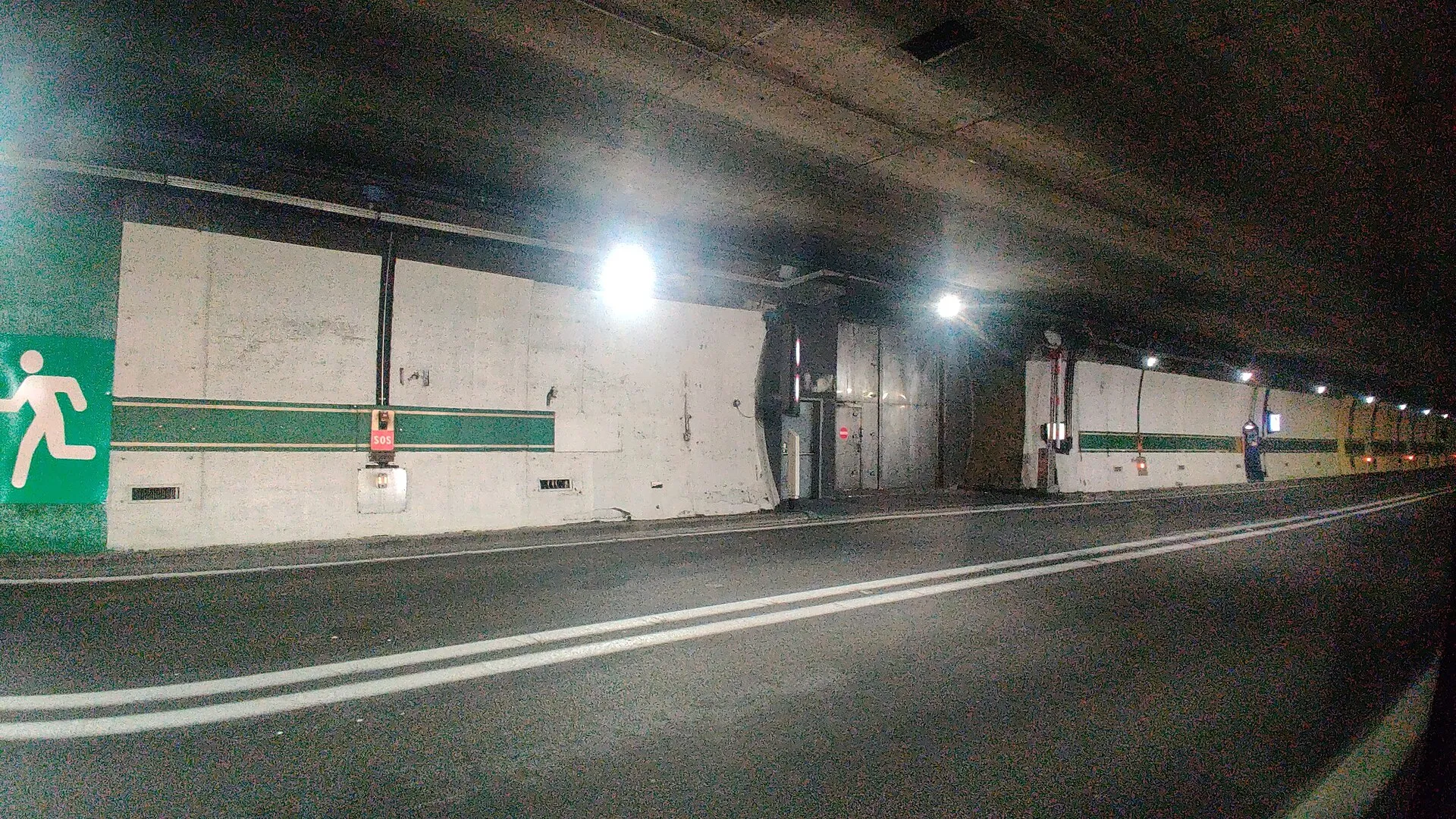
Under about 1700 m of rock (about 4800 m.w.e.), LSM hosted the NEMO-3 double-beta experiment and the SuperNEMO demonstrator, as well as EDELWEISS dark matter searches.
- 1Boulby Underground LaboratoryUnderground laboratory
- 2Laboratorio Subterráneo de Canfranc (LSC)Underground laboratory
- 3Laboratoire Souterrain de Modane (LSM)Underground laboratory
- 4Laboratori Nazionali del Gran Sasso (LNGS)Underground laboratory
- 5KM3NeTNeutrino telescope
- 6Neutrino Energy Group, BerlinNeutrinovoltaic research
- 7Baksan Neutrino ObservatoryUnderground laboratory
- 8Baikal-GVDNeutrino telescope
- 9China Jinping Underground Laboratory (CJPL)Underground laboratory
- 10JUNOReactor experiment
- 11Kamioka ObservatoryUnderground laboratory
- 12SNOLABUnderground laboratory
- 13Sanford Underground Research Facility (SURF)Underground laboratory
- 14IceCube Neutrino ObservatoryNeutrino telescope
Compare all experiments → · World map →
In plain words
The Fréjus road tunnel links France and Italy under the Alps. At its midpoint, right on the border and under about 1700 m of rock, a side door opens into the Laboratoire Souterrain de Modane (LSM), France's deep underground laboratory. It is small compared with Gran Sasso, but it is among the deepest in Europe and has been the home of the NEMO double beta decay programme.
The laboratory
LSM was excavated while the tunnel was being built and opened in 1982. It is run by the French CNRS/IN2P3 together with CEA. The overburden of about 4800 m.w.e. reduces the muon flux to roughly four muons per square metre per day, a few million times less than at the surface. A main hall and smaller rooms offer a few thousand cubic metres of space, plus a low-background gamma-spectrometry facility.
Key experiments
- The Fréjus experiment (1984–1988), a 900-ton iron tracking calorimeter, searched for proton decay and measured atmospheric neutrinos. Its ratio of muon-like to electron-like events was consistent with expectation, which at the time appeared to contradict Kamiokande and IMB.
- NEMO-3 (2003–2011) combined thin source foils of seven isotopes with a tracker and calorimeter, measuring two-neutrino double beta decay half-lives and setting limits on the neutrinoless mode while seeing both electrons individually.
- The SuperNEMO demonstrator continues this tracking-plus-calorimeter approach with ⁸²Se.
- CUPID-Mo (2019–2020) tested scintillating ¹⁰⁰Mo bolometers for the future CUPID experiment.
- EDELWEISS searched for dark matter with cryogenic germanium detectors.
Why it matters for neutrino physics
The NEMO approach of tracking both electrons is the only one that can tell how a double beta decay happens, not just that it happens. If neutrinoless double beta decay is discovered, the angular and energy distributions measured this way could help reveal the underlying mechanism. Modane has also been a European proving ground for bolometers.
Frequently asked questions
Where exactly is the Modane laboratory?
Halfway along the 13 km Fréjus road tunnel between Modane in France and Bardonecchia in Italy, accessible from the tunnel itself.
What makes NEMO-style detectors special?
They separate the source from the detector, so they can measure the energies and directions of both emitted electrons, at the price of a smaller source mass than calorimetric detectors.
Related terms
Mentioned in 6 pages
Last updated: · Editorial standard
Cite this page
Text
Neutrino Atlas (2026). “Laboratoire Souterrain de Modane (LSM)”. Retrieved 22 November 2026, from https://neutrino-atlas.com/terms/modane/BibTeX
@misc{neutrinoatlas2026termsmodane,
  title        = {Laboratoire Souterrain de Modane (LSM)},
  author       = {{Neutrino Atlas}},
  year         = {2026},
  url          = {https://neutrino-atlas.com/terms/modane/},
  note         = {Accessed 2026-11-22},
  language     = {english}
}