Baksan Neutrino Observatory
A Russian laboratory in a tunnel under Mount Andyrchi in the North Caucasus.
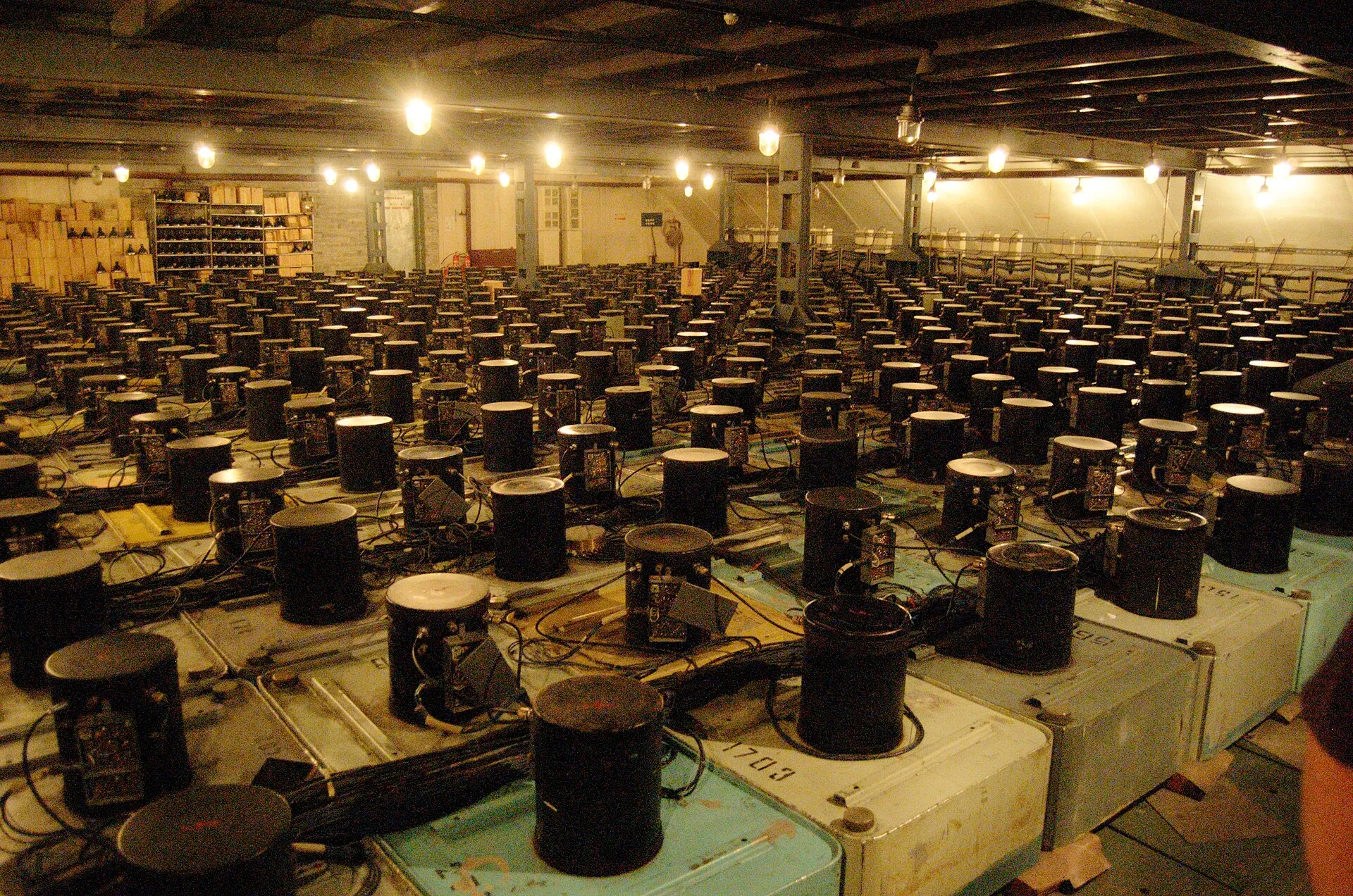
Operated by the Institute for Nuclear Research (INR RAS), it hosts the Baksan Underground Scintillation Telescope (since 1977) and the SAGE and BEST gallium experiments, at depths up to about 4700 m.w.e.
- 1Boulby Underground LaboratoryUnderground laboratory
- 2Laboratorio Subterráneo de Canfranc (LSC)Underground laboratory
- 3Laboratoire Souterrain de Modane (LSM)Underground laboratory
- 4Laboratori Nazionali del Gran Sasso (LNGS)Underground laboratory
- 5KM3NeTNeutrino telescope
- 6Neutrino Energy Group, BerlinNeutrinovoltaic research
- 7Baksan Neutrino ObservatoryUnderground laboratory
- 8Baikal-GVDNeutrino telescope
- 9China Jinping Underground Laboratory (CJPL)Underground laboratory
- 10JUNOReactor experiment
- 11Kamioka ObservatoryUnderground laboratory
- 12SNOLABUnderground laboratory
- 13Sanford Underground Research Facility (SURF)Underground laboratory
- 14IceCube Neutrino ObservatoryNeutrino telescope
Compare all experiments → · World map →
In plain words
In the Baksan valley of the Kabardino-Balkarian Republic, near Mount Elbrus, two parallel tunnels run about 4 km straight into Mount Andyrchi. Along them lie the halls of the Baksan Neutrino Observatory, run by the Institute for Nuclear Research of the Russian Academy of Sciences. It was the Soviet Union's main underground laboratory and remains Russia's centre for gallium solar neutrino research.
The laboratory
Construction of the tunnels began in the late 1960s, at a time when Soviet physicists such as Moisey Markov were promoting deep underground and underwater neutrino detection. Because the tunnels are horizontal, depth grows with the distance from the entrance: the scintillation telescope hall is near the entrance, while the gallium–germanium laboratory 3.5 km in lies under about 2000 m of rock, equivalent to about 4700 m.w.e.
Key experiments
- The Baksan Underground Scintillation Telescope (since 1977), more than 3000 liquid-scintillator counters forming a multi-layer building, studies cosmic-ray muons and atmospheric neutrinos and watches for supernovae. It recorded a burst of 5 events coinciding with SN1987A.
- SAGE (since 1990) used about 50 tons of metallic gallium to measure the pp neutrino flux from the Sun. Its results, together with GALLEX, showed that the low-energy solar flux is also reduced. It also ran the ⁵¹Cr and ³⁷Ar source calibrations.
- BEST (2019) placed a 3.4 MCi ⁵¹Cr source at the centre of two nested gallium volumes and confirmed the gallium anomaly.
Vladimir Gavrin led SAGE and BEST for decades. The observatory also hosts low-background laboratories and a geophysical programme.
Why it matters for neutrino physics
SAGE was one of only two experiments able to see the dominant low-energy solar neutrinos for many years, and the gallium source experiments at Baksan remain central to the sterile-neutrino question. Plans for a large scintillator detector for geoneutrinos and solar neutrinos at Baksan have also been discussed.
Frequently asked questions
Why is gallium used at Baksan?
Gallium-71 captures electron neutrinos above 233 keV, low enough to include the pp neutrinos that carry most of the Sun's neutrino flux.
Did Baksan see SN1987A?
The scintillation telescope recorded 5 events within about 9 seconds coinciding with the Kamiokande and IMB bursts, although with a lower statistical weight.
Related terms
- Baksan Underground Scintillation Telescope
- BEST (Baksan Experiment on Sterile Transitions)
- SAGE (Soviet–American Gallium Experiment)
People
- Stanislav Pavlovich Mikheyev
- Georgy Timofeyevich Zatsepin
- Stirling Auchincloss Colgate
- Vladimir N. Gavrin (Vladimir Nikolaevich Gavrin)
- Valery Anatolievich Rubakov
Latest research on this topic
- Sensitivity Enhancement of a Laser Gyroscope in the Underground Laboratory of Baksan Neutrino Observatory, Institute for Nuclear Research of the Russian Academy of SciencesRudenko, K.V., Gavrilyuk, Yu. M., Gurin, F.S. et al. · 21 December 2025
On the timeline
Mentioned in 16 pages
People 8
Last updated: · Editorial standard
Cite this page
Text
Neutrino Atlas (2026). “Baksan Neutrino Observatory”. Retrieved 22 November 2026, from https://neutrino-atlas.com/terms/baksan-observatory/BibTeX
@misc{neutrinoatlas2026termsbaksanobservatory,
  title        = {Baksan Neutrino Observatory},
  author       = {{Neutrino Atlas}},
  year         = {2026},
  url          = {https://neutrino-atlas.com/terms/baksan-observatory/},
  note         = {Accessed 2026-11-22},
  language     = {english}
}