Laboratorio Subterráneo de Canfranc (LSC)
The Spanish underground laboratory under Monte Tobazo in the Pyrenees.
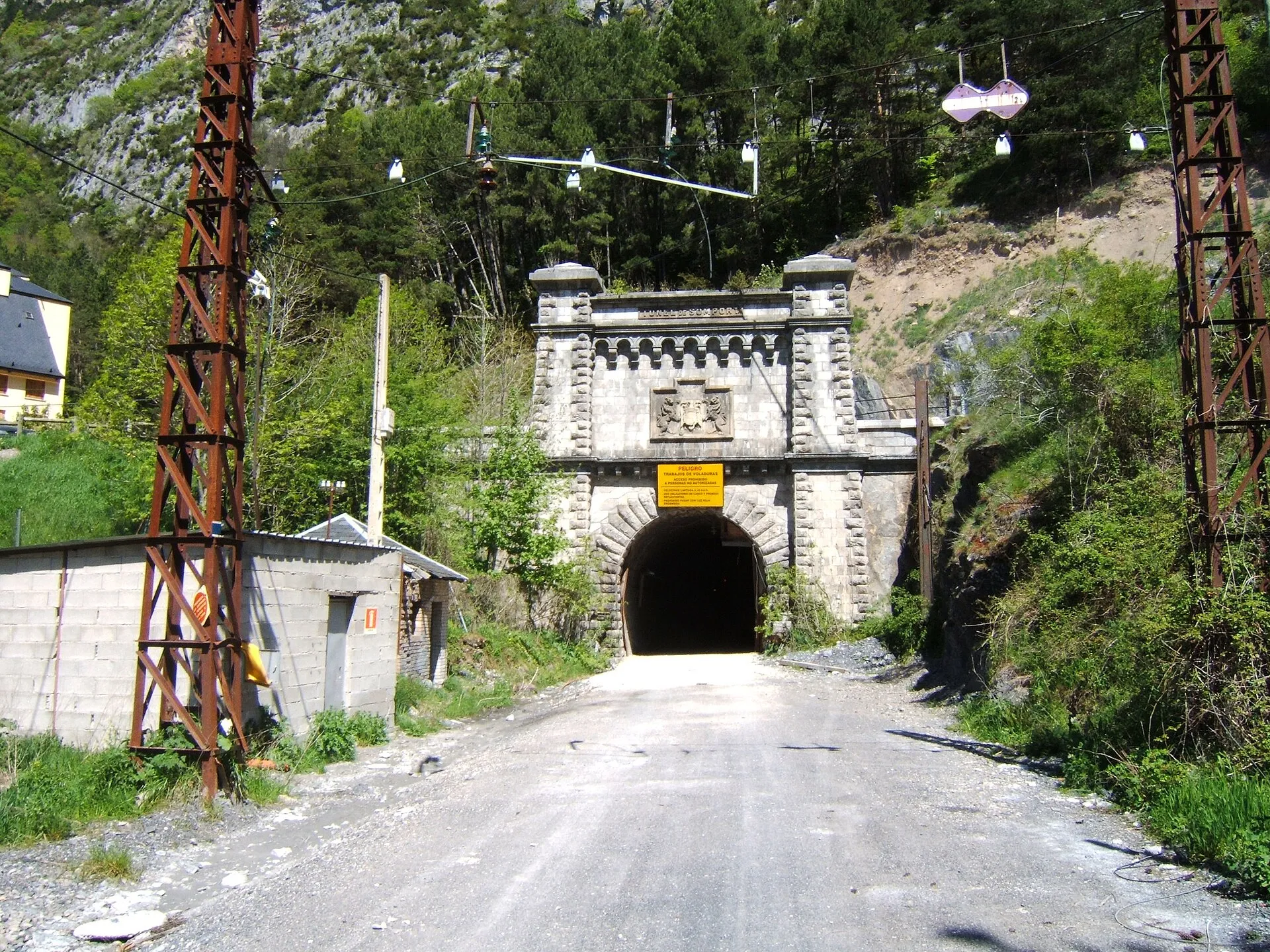
Located at a depth of about 2450 m.w.e. next to the Somport road tunnel, LSC hosts the NEXT high-pressure xenon double beta decay programme.
- 1Boulby Underground LaboratoryUnderground laboratory
- 2Laboratorio Subterráneo de Canfranc (LSC)Underground laboratory
- 3Laboratoire Souterrain de Modane (LSM)Underground laboratory
- 4Laboratori Nazionali del Gran Sasso (LNGS)Underground laboratory
- 5KM3NeTNeutrino telescope
- 6Neutrino Energy Group, BerlinNeutrinovoltaic research
- 7Baksan Neutrino ObservatoryUnderground laboratory
- 8Baikal-GVDNeutrino telescope
- 9China Jinping Underground Laboratory (CJPL)Underground laboratory
- 10JUNOReactor experiment
- 11Kamioka ObservatoryUnderground laboratory
- 12SNOLABUnderground laboratory
- 13Sanford Underground Research Facility (SURF)Underground laboratory
- 14IceCube Neutrino ObservatoryNeutrino telescope
Compare all experiments → · World map →
In plain words
Under Monte Tobazo in the Spanish Pyrenees, between the Somport road tunnel and a disused international railway tunnel, lies the Laboratorio Subterráneo de Canfranc (LSC). It is Spain's underground laboratory and the home of NEXT, an experiment that tries to find neutrinoless double beta decay by photographing the tracks of electrons in high-pressure xenon gas.
The laboratory
Physicists from the University of Zaragoza began underground measurements in the old Canfranc railway tunnel in the 1980s. The present laboratory, with a main hall about 40 m long, 15 m wide and 12 m high plus smaller halls and clean rooms, opened in 2010. About 850 m of rock give an overburden of about 2450 m.w.e. The LSC is a Spanish national facility funded by the central government, the government of Aragón and the University of Zaragoza.
Experiments
- NEXT-White (2016–2021) demonstrated the high-pressure xenon TPC technique with about 5 kg of ¹³⁶Xe-enriched gas, measuring the two-neutrino mode and showing excellent energy resolution.
- NEXT-100, with about 100 kg of enriched xenon, began operation in 2024.
- ANAIS-112 tests the controversial DAMA/LIBRA annual modulation with sodium-iodide crystals and has not confirmed it.
- Other projects include the CROSS bolometer R&D for double beta decay and low-background germanium screening.
How NEXT uses the site
In gas at about 15 bar, the two electrons from a double beta decay leave tracks several centimetres long, each ending in a dense blob of energy. A single electron from a background gamma ray leaves only one blob. This topological signature, combined with electroluminescent light read out by photomultipliers and SiPMs, lets NEXT reject much of the background. The modest depth is adequate because the topological cuts and an active veto remove most cosmogenic events.
Why it matters for neutrino physics
Canfranc gives Europe a second road-accessible laboratory and a base for a gas-phase route to tonne-scale neutrinoless double beta decay searches, complementary to liquid xenon and germanium.
Frequently asked questions
How deep is Canfranc?
About 850 m of rock under Monte Tobazo, equivalent to about 2450 m of water, shallower than LNGS or Modane.
What is special about NEXT?
It uses gaseous rather than liquid xenon, so it can image the two-electron track topology of double beta decay while keeping very good energy resolution.
Related terms
Mentioned in 3 pages
Last updated: · Editorial standard
Cite this page
Text
Neutrino Atlas (2026). “Laboratorio Subterráneo de Canfranc (LSC)”. Retrieved 22 November 2026, from https://neutrino-atlas.com/terms/canfranc/BibTeX
@misc{neutrinoatlas2026termscanfranc,
  title        = {Laboratorio Subterráneo de Canfranc (LSC)},
  author       = {{Neutrino Atlas}},
  year         = {2026},
  url          = {https://neutrino-atlas.com/terms/canfranc/},
  note         = {Accessed 2026-11-22},
  language     = {english}
}