Boulby Underground Laboratory
The UK's deep laboratory in an active potash and salt mine in North Yorkshire.
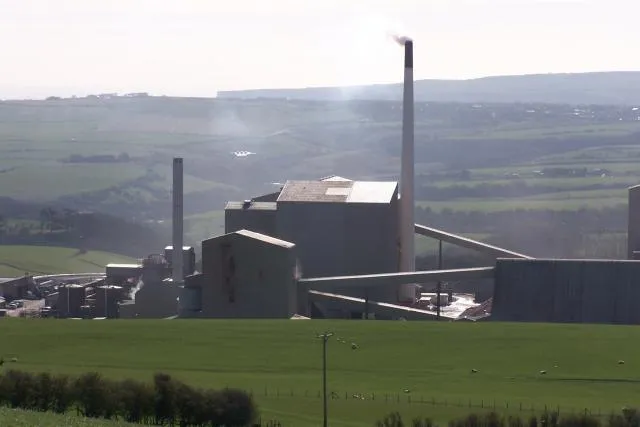
At about 1100 m depth (about 2800 m.w.e.), the low-radioactivity salt environment suits dark matter and low-background research. It has been considered for a future large water-based neutrino detector.
- 1Boulby Underground LaboratoryUnderground laboratory
- 2Laboratorio Subterráneo de Canfranc (LSC)Underground laboratory
- 3Laboratoire Souterrain de Modane (LSM)Underground laboratory
- 4Laboratori Nazionali del Gran Sasso (LNGS)Underground laboratory
- 5KM3NeTNeutrino telescope
- 6Neutrino Energy Group, BerlinNeutrinovoltaic research
- 7Baksan Neutrino ObservatoryUnderground laboratory
- 8Baikal-GVDNeutrino telescope
- 9China Jinping Underground Laboratory (CJPL)Underground laboratory
- 10JUNOReactor experiment
- 11Kamioka ObservatoryUnderground laboratory
- 12SNOLABUnderground laboratory
- 13Sanford Underground Research Facility (SURF)Underground laboratory
- 14IceCube Neutrino ObservatoryNeutrino telescope
Compare all experiments → · World map →
In plain words
On the North Yorkshire coast, the Boulby mine extracts rock salt and polyhalite, a fertiliser mineral, from more than a kilometre below the surface, with tunnels that extend under the North Sea. In a corner of this working mine sits the UK's only deep underground laboratory. Salt is a gift to low-background physics: it contains very little uranium and thorium, so the walls themselves are unusually quiet.
The laboratory
Boulby Underground Laboratory is operated by the Science and Technology Facilities Council (STFC) in partnership with ICL-UK, which runs the mine. It lies about 1100 m down, roughly 2800 m.w.e., and reduces the cosmic-muon flux by a factor of several hundred thousand. The first background measurements underground were made in 1989. The laboratory has been rebuilt several times; the present facility dates from 2017, and excavation for a larger next-generation laboratory was completed in 2025.
Research
- Boulby was a pioneer of direct dark matter searches, with the NaIAD sodium-iodide detectors, the ZEPLIN series of liquid-xenon detectors, which helped establish the two-phase xenon technique, and the DRIFT directional detectors.
- A low-background screening facility measures trace radioactivity in materials for international experiments, a service needed by every double beta decay and dark matter project.
- Geology, astrobiology and studies for future Mars and Moon missions use the mine's deep, dry environment.
Neutrino plans
Boulby has been studied as the site for a kiloton-scale water-based detector loaded with gadolinium, about 25 km from the Hartlepool nuclear power station. Such a detector would test remote reactor monitoring by counting antineutrinos through inverse beta decay, and could study new water-based liquid-scintillator technology. These ideas have not yet led to a funded experiment.
Why it matters for neutrino physics
Boulby's main contribution so far is indirect: techniques for background control and material screening developed here are used in neutrino and dark matter experiments worldwide.
Frequently asked questions
Why is a salt mine good for experiments?
Rock salt has very low levels of uranium, thorium and potassium, so the natural gamma and neutron background from the walls is small. Salt is also dry and self-sealing.
Is Boulby a neutrino laboratory?
Mostly it hosts dark matter, low-background and other research. Neutrino detectors have been proposed there but not yet built.
Mentioned in 2 pages
Last updated: · Editorial standard
Cite this page
Text
Neutrino Atlas (2026). “Boulby Underground Laboratory”. Retrieved 22 November 2026, from https://neutrino-atlas.com/terms/boulby/BibTeX
@misc{neutrinoatlas2026termsboulby,
  title        = {Boulby Underground Laboratory},
  author       = {{Neutrino Atlas}},
  year         = {2026},
  url          = {https://neutrino-atlas.com/terms/boulby/},
  note         = {Accessed 2026-11-22},
  language     = {english}
}