SNOLAB
A clean-room laboratory 2 km underground in the Creighton nickel mine near Sudbury, Canada.
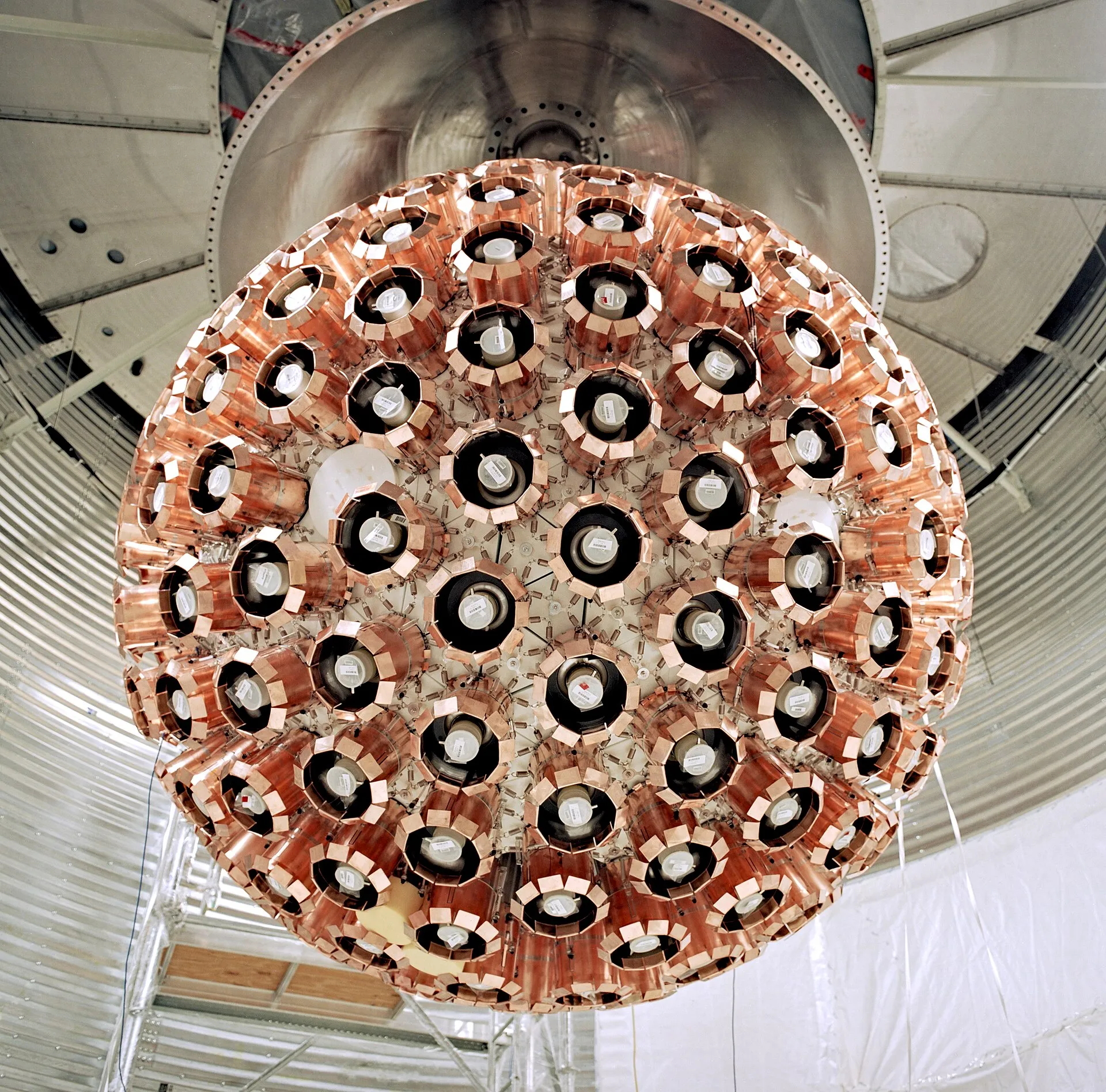
At 2070 m depth (about 6000 m.w.e.), SNOLAB is one of the deepest laboratories, and the whole facility is a class-2000 clean room. It grew out of the SNO experiment and now hosts SNO+ and dark matter experiments. It is a proposed site for nEXO.
- 1Boulby Underground LaboratoryUnderground laboratory
- 2Laboratorio Subterráneo de Canfranc (LSC)Underground laboratory
- 3Laboratoire Souterrain de Modane (LSM)Underground laboratory
- 4Laboratori Nazionali del Gran Sasso (LNGS)Underground laboratory
- 5KM3NeTNeutrino telescope
- 6Neutrino Energy Group, BerlinNeutrinovoltaic research
- 7Baksan Neutrino ObservatoryUnderground laboratory
- 8Baikal-GVDNeutrino telescope
- 9China Jinping Underground Laboratory (CJPL)Underground laboratory
- 10JUNOReactor experiment
- 11Kamioka ObservatoryUnderground laboratory
- 12SNOLABUnderground laboratory
- 13Sanford Underground Research Facility (SURF)Underground laboratory
- 14IceCube Neutrino ObservatoryNeutrino telescope
Compare all experiments → · World map →
In plain words
To reach SNOLAB, scientists ride the miners' cage two kilometres down Vale's Creighton nickel mine near Sudbury, Ontario, walk more than a kilometre through a tunnel, and then shower and change into clean-room clothing. The whole laboratory is kept as clean as a semiconductor factory, because a single speck of mine dust carries enough natural radioactivity to spoil an ultra-sensitive measurement.
The laboratory
SNOLAB lies at a depth of 2070 m, about 6000 m.w.e., where fewer than ten muons per square metre cross each month. It began as the cavern of the Sudbury Neutrino Observatory, which ran from 1999 to 2006. The laboratory was then expanded into a permanent facility of several halls, completed in 2012, with all underground space operated as a class-2000 clean room.
Key results
SNO used 1000 tons of heavy water to count solar ⁸B neutrinos through charged-current and neutral-current reactions at once. In 2001 and 2002 it showed that the total flux of all flavours matched the standard solar model, while the electron-flavour part was only about a third: the decisive proof that solar neutrinos change flavour. Arthur B. McDonald shared the 2015 Nobel Prize for this result, building on the heavy-water idea of Herbert Chen.
Status today
- SNO+, led for many years by Mark Chen, reuses the SNO acrylic vessel filled with liquid scintillator and plans to load it with tellurium to search for neutrinoless double beta decay.
- HALO, a lead-based detector, watches for supernova neutrinos within SNEWS.
- Dark matter experiments include DEAP-3600, PICO and SuperCDMS SNOLAB.
SNOLAB is also a candidate site for nEXO, a planned five-tonne xenon double beta decay detector, and its depth makes it attractive for any future experiment that must reach the lowest possible cosmogenic background.
Frequently asked questions
Why is SNOLAB a clean room?
Mine dust contains uranium, thorium and potassium. Keeping the whole lab extremely clean prevents this radioactivity from reaching detectors that look for a few events per year.
Is the mine still active?
Yes. Creighton is a working nickel mine, and the laboratory shares the shaft and infrastructure with mining operations.
Related terms
Latest research on this topic
- Estimating cosmogenic backgrounds in nEXO at SNOLAB using Geant4 and FLUKARoss, R., Kharusi, S. Al, Brunner, T. et al. · 31 October 2026
- Measurement of the muon flux at SNOLAB using the DEAP-3600 experimentDEAP Collaboration · 20 August 2026
- Photon elastic scattering background events in the SuperCDMS SNOLAB experimentHassan, Noah · 3 August 2026
- Radiopurity material assays and radiation exposure projections for superconducting qubit measurements at SNOLABAhmed, Y., Binoy, B., Bunker, R. et al. · 17 July 2026
- Calibration and performance of germanium high voltage detectors for SuperCDMS SNOLABSuperCDMS Collaboration · 24 June 2026
- Neutrino oscillation prospects with a dual-baseline beam from BNL to SNOLAB and SURFFiza, Nishat, Masud, Mehedi, Siyeon, Kim et al. · 19 October 2025
Mentioned in 21 pages
Lessons 3
Milestones 1
Last updated: · Editorial standard
Cite this page
Text
Neutrino Atlas (2026). “SNOLAB”. Retrieved 22 November 2026, from https://neutrino-atlas.com/terms/snolab/BibTeX
@misc{neutrinoatlas2026termssnolab,
  title        = {SNOLAB},
  author       = {{Neutrino Atlas}},
  year         = {2026},
  url          = {https://neutrino-atlas.com/terms/snolab/},
  note         = {Accessed 2026-11-22},
  language     = {english}
}