2013Discovery
IceCube finds high-energy astrophysical neutrinos
In Science on 22 November 2013, IceCube reported 28 neutrino events with energies from about 30 TeV to over 1 PeV, starting inside the detector, collected over two years. They included the PeV cascades nicknamed 'Bert' and 'Ernie', first reported in 2012. The events were inconsistent with atmospheric backgrounds at 4.1σ and came from all over the sky. This first evidence for a cosmic high-energy neutrino flux opened neutrino astronomy at TeV-PeV energies.
- Date
- 22 November 2013
- Kind of event
- Discovery
- People involved
- Francis Halzen
- Experiments
- IceCube Neutrino Observatory
The situation before
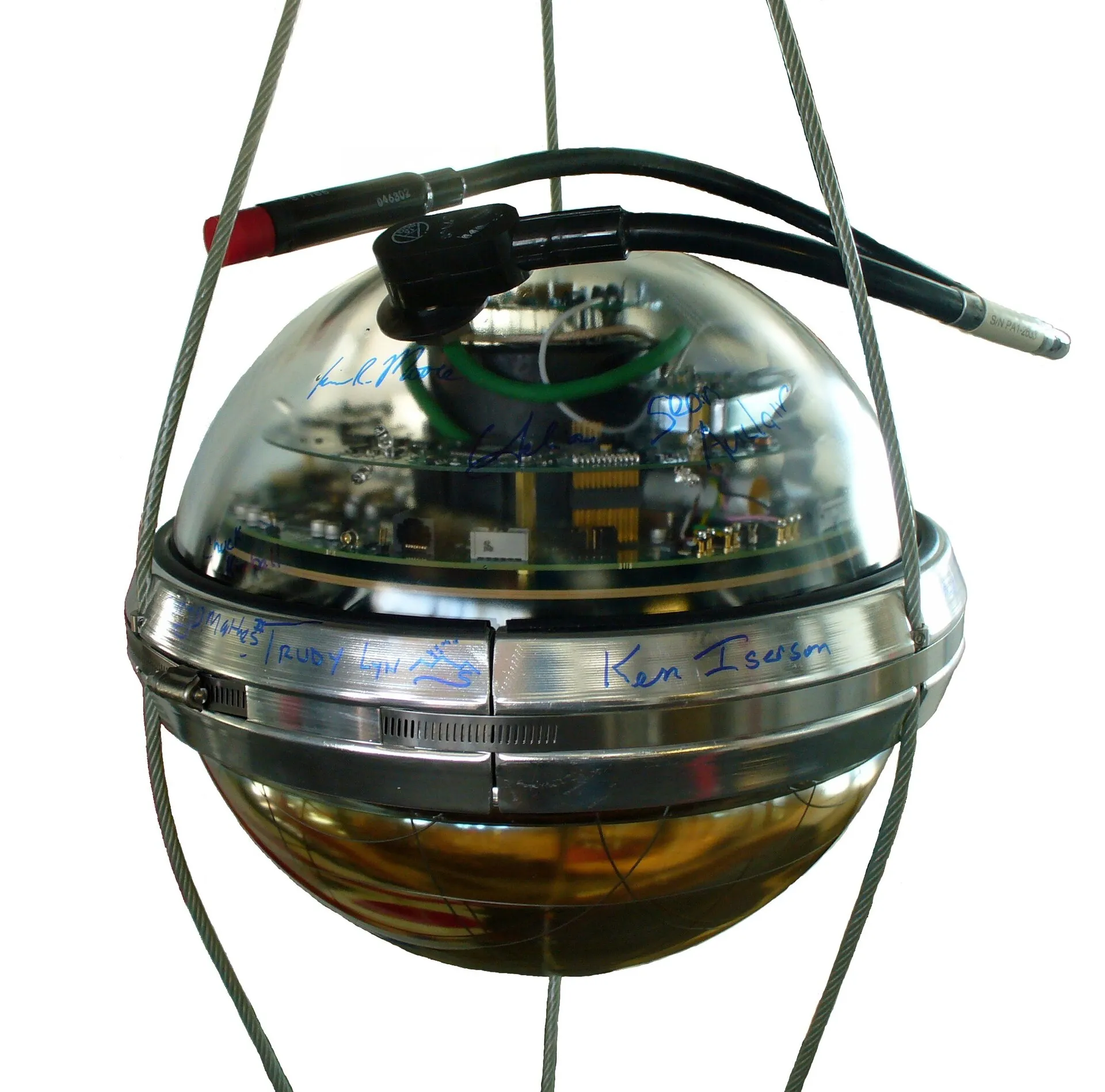
For decades physicists had expected that the sources of the highest-energy cosmic rays would also produce neutrinos. Unlike protons, neutrinos are not deflected by magnetic fields and are hardly absorbed, so they should point back to their sources. Earlier detectors such as DUMAND, Baikal and AMANDA had seen only atmospheric neutrinos, produced when cosmic rays hit the Earth's atmosphere. IceCube, a cubic kilometre of Antarctic ice instrumented with 5,160 optical sensors on 86 strings, was completed in December 2010 to reach the sensitivity where an astrophysical flux was finally expected to show.
What happened
The first sign came by surprise. A search for ultra-high-energy cosmogenic neutrinos turned up two showers with deposited energies of about 1.04 and 1.14 PeV, recorded in August 2011 and January 2012. The collaboration nicknamed them Bert and Ernie and showed them at the Neutrino 2012 conference in Kyoto. Two events were far too few for a discovery, but too energetic to be easily explained by atmospheric neutrinos.
IceCube then designed a dedicated search for events that start inside the detector. The outer layers of the array served as a veto: an incoming atmospheric muon leaves light there, while a neutrino can interact deep inside without any prior signal. This self-veto approach also suppresses atmospheric neutrinos that arrive together with muons from the same air shower. In data from May 2010 to May 2012, about 662 days, the search found 28 events with deposited energies between about 30 TeV and 1.2 PeV, including Bert and Ernie. Most were showers (cascades); seven had a muon track.
The expected background from atmospheric muons and neutrinos was about 10.6 events. The observed excess, its hard energy spectrum and the spread of events over the whole sky together disfavoured a purely atmospheric origin at 4.1σ. The paper, "Evidence for High-Energy Extraterrestrial Neutrinos at the IceCube Detector", was published in Science on 22 November 2013. Francis Halzen, who had championed the project since the 1990s, was the principal investigator.
Reaction
The result was widely seen as the start of high-energy neutrino astronomy. Physics World named it its Breakthrough of the Year for 2013. Physicists were careful to stress what it did not show: the events did not cluster around any known source, and the angular resolution of the cascade events was only tens of degrees. The measured flux was close to the Waxman–Bahcall bound, an earlier estimate of how bright neutrino sources powered by cosmic rays could be.
Consequences
A third year of data raised the sample to 37 events and the significance to 5.7σ in 2014; one of the new events, nicknamed Big Bird, deposited about 2 PeV. Independent analyses with upward-going muon tracks confirmed the flux. The question then shifted from whether cosmic neutrinos exist to where they come from. The answer began to emerge with the blazar TXS 0506+056 in 2018, the active galaxy NGC 1068 in 2022 and the Galactic plane in 2023. In 2021 IceCube also reported a Glashow resonance candidate from the same flux. Plans for IceCube-Gen2 aim at a detector about eight times larger.
Frequently asked questions
When were astrophysical neutrinos first found?
IceCube published evidence for a high-energy extraterrestrial neutrino flux in Science on 22 November 2013, based on 28 events from May 2010 to May 2012. A 5.7σ confirmation followed in 2014.
What are Bert and Ernie?
They are the first two neutrino events above 1 PeV, recorded in 2011 and 2012 and named after the Sesame Street characters. They prompted the dedicated search that led to the 2013 result.
Did the 2013 events point to a source?
No. The events were spread over the whole sky and did not cluster around any known object. The first identified candidate source, the blazar TXS 0506+056, followed in 2018.
Original papers
- First resultM. G. Aartsen et al. (IceCube Collaboration), First Observation of PeV-Energy Neutrinos with IceCube, Phys. Rev. Lett. 111, 021103 (2013)DOI 10.1103/PhysRevLett.111.021103arXiv:1304.5356
- DiscoveryM. G. Aartsen et al. (IceCube Collaboration), Evidence for High-Energy Extraterrestrial Neutrinos at the IceCube Detector, Science 342, 1242856 (2013)DOI 10.1126/science.1242856
Concepts
Mentioned in 2 pages
Last updated: · Editorial standard
Cite this page
Text
Neutrino Atlas (2026). “2013: IceCube finds high-energy astrophysical neutrinos”. Retrieved 22 November 2026, from https://neutrino-atlas.com/timeline/2013-icecube-astrophysical-neutrinos/BibTeX
@misc{neutrinoatlas2026beastrophysicalneutrinos,
  title        = {2013: IceCube finds high-energy astrophysical neutrinos},
  author       = {{Neutrino Atlas}},
  year         = {2026},
  url          = {https://neutrino-atlas.com/timeline/2013-icecube-astrophysical-neutrinos/},
  note         = {Accessed 2026-11-22},
  language     = {english}
}