2013Experiment
GERDA Phase I disfavours the Klapdor claim
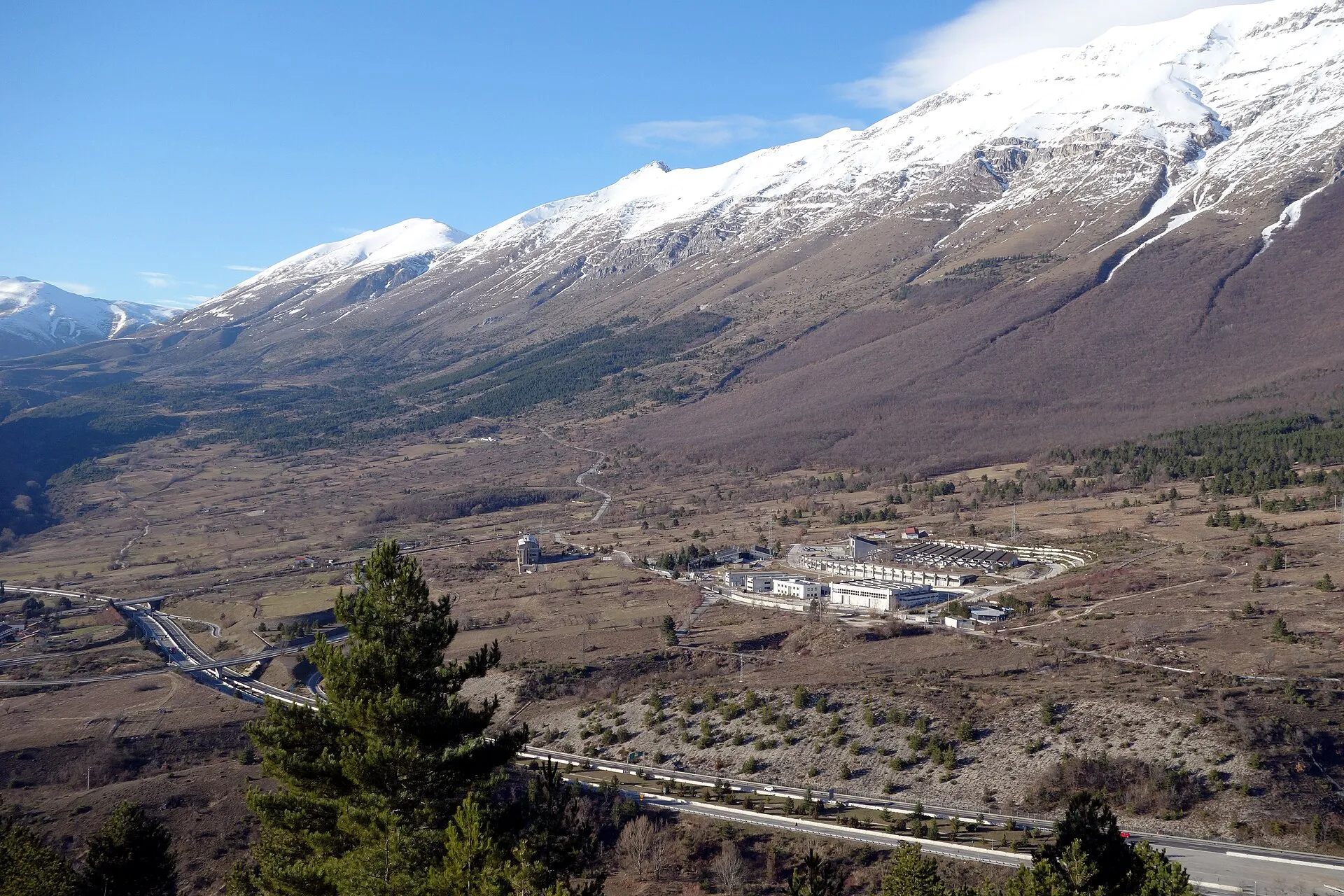
In 2001 part of the Heidelberg-Moscow collaboration led by Hans Klapdor-Kleingrothaus had claimed evidence for neutrinoless double beta decay of germanium-76, a claim disputed from the start. In July 2013 GERDA, operating bare enriched germanium detectors in liquid argon at Gran Sasso, saw no signal in Phase I and set a half-life limit of 2.1 × 10²⁵ years. Combined with other experiments, the result strongly disfavoured the claim. GERDA Phase II later reached far beyond it.
- Date
- 2013
- Kind of event
- Experiment
- People involved
- Stefan Schönert, Hans Volker Klapdor-Kleingrothaus
Background
Neutrinoless double beta decay would show that neutrinos are their own antiparticles and that lepton number is not conserved. In 2001 four members of the Heidelberg-Moscow collaboration, led by Hans Klapdor-Kleingrothaus, claimed to see it in germanium-76. Their analysis of data taken at Gran Sasso from 1990 to 2003 later quoted a half-life of about 1.2 × 10²⁵ years at about 4σ. Most of the community, including other members of the original collaboration, doubted the claim because the signal sat on a background with several unexplained peaks. Testing it with the same isotope became a central goal.
What happened
GERDA, the Germanium Detector Array at LNGS, was designed for exactly this test, with Stefan Schönert among its founders and spokespeople. Instead of housing germanium crystals in copper cryostats, GERDA immersed bare enriched germanium detectors directly in 64 m³ of liquid argon, which cooled and shielded them, surrounded by a water tank that also served as a muon veto. Phase I ran from November 2011 to May 2013 and used refurbished Heidelberg-Moscow and IGEX detectors plus new ones, for a total exposure of 21.6 kg·yr. The background near the decay energy of 2,039 keV was about ten times lower than in Heidelberg-Moscow.
The analysis was done blind: events near the signal energy stayed hidden until all cuts were fixed. The box was opened in June 2013 and the result was presented at Gran Sasso in July. If the claim were right, GERDA should have seen about six signal events above a background of about two in the energy window. It found three events in total, consistent with background alone. The result, published in Physical Review Letters in September 2013, set a half-life limit of
Reaction
Combined with the earlier germanium experiments the limit rose to 3.0 × 10²⁵ years. GERDA computed a Bayes factor of 0.024 against the claimed signal, and also including the xenon results of KamLAND-Zen and EXO-200 disfavoured it further. Klapdor-Kleingrothaus disputed the comparison, but most physicists regarded the claim as ruled out. Because the test used the same isotope, it did not depend on uncertain nuclear matrix elements.
Consequences
After an upgrade with new broad-energy germanium detectors and a liquid-argon scintillation veto, GERDA Phase II started in December 2015 and reached a background so low that almost no events were expected in the signal region. Its final result in 2020 pushed the limit to 1.8 × 10²⁶ years. The approach continues in LEGEND.
Frequently asked questions
What was the Klapdor claim?
In 2001 part of the Heidelberg-Moscow collaboration reported evidence for neutrinoless double beta decay of germanium-76, later quoting a half-life of about 1.2 × 10²⁵ years. The claim was controversial from the start.
How did GERDA test it?
GERDA used the same isotope with a much lower background and a blind analysis. It expected about six signal events if the claim were true, but saw only three events in total, consistent with background.
Is neutrinoless double beta decay ruled out?
No. GERDA only excluded the specific claimed half-life. Experiments such as LEGEND and KamLAND-Zen continue to search at much longer half-lives.
Original papers
- First resultM. Agostini et al. (GERDA Collaboration), Results on Neutrinoless Double-β Decay of 76Ge from Phase I of the GERDA Experiment, Phys. Rev. Lett. 111, 122503 (2013)DOI 10.1103/PhysRevLett.111.122503arXiv:1307.4720
Concepts
Mentioned in 1 page
Lessons 1
Last updated: · Editorial standard
Cite this page
Text
Neutrino Atlas (2026). “2013: GERDA Phase I disfavours the Klapdor claim”. Retrieved 22 November 2026, from https://neutrino-atlas.com/timeline/2013-gerda-refutes-claim/BibTeX
@misc{neutrinoatlas2026ine2013gerdarefutesclaim,
  title        = {2013: GERDA Phase I disfavours the Klapdor claim},
  author       = {{Neutrino Atlas}},
  year         = {2026},
  url          = {https://neutrino-atlas.com/timeline/2013-gerda-refutes-claim/},
  note         = {Accessed 2026-11-22},
  language     = {english}
}