2002Award
Nobel Prize for neutrino astrophysics
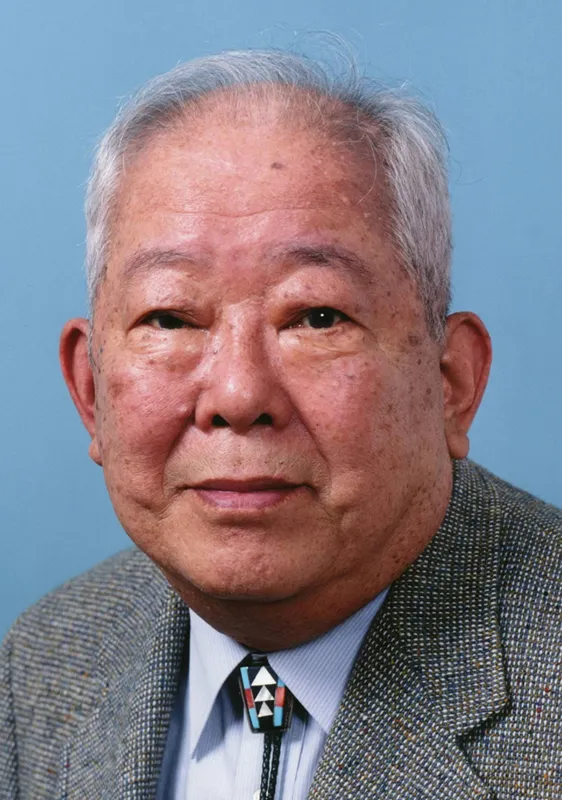
Raymond Davis Jr. and Masatoshi Koshiba shared half of the 2002 Nobel Prize in Physics 'for pioneering contributions to astrophysics, in particular for the detection of cosmic neutrinos'. Davis was honoured for the Homestake solar experiment, Koshiba for Kamiokande's detection of solar and SN 1987A neutrinos. The other half went to Riccardo Giacconi for X-ray astronomy.
- Date
- 2002
- Kind of event
- Award
- People involved
- Raymond Davis Jr., Masatoshi Koshiba
- Experiments
- Homestake Chlorine Experiment, Kamiokande
Background
For most of the twentieth century astronomy meant light: radio waves, visible light and, from the 1960s, X-rays. Neutrinos were the one messenger that could come straight from the core of a star, but they were so hard to catch that detecting them from space seemed close to impossible. Two experimentalists made it routine. The 2002 Nobel Prize in Physics recognised them, together with the founder of X-ray astronomy, as the people who opened new windows on the universe.
The award
On 8 October 2002 the Royal Swedish Academy of Sciences announced that one half of the prize went jointly to Raymond Davis Jr. of the University of Pennsylvania and Masatoshi Koshiba of the University of Tokyo "for pioneering contributions to astrophysics, in particular for the detection of cosmic neutrinos". The other half went to Riccardo Giacconi for pioneering contributions that led to the discovery of cosmic X-ray sources. The prizes were presented in Stockholm on 10 December 2002.
Raymond Davis and Homestake
Davis, a chemist by training, built a tank of about 615 tonnes of cleaning fluid (tetrachloroethylene) 1,480 m underground in the Homestake gold mine in South Dakota. An electron neutrino from the Sun could turn a chlorine-37 nucleus into radioactive argon-37; every few weeks Davis flushed out the few argon atoms with helium and counted their decays. The method is described under chlorine–argon detection. From the first result in 1968 until the experiment ended in the 1990s, he measured about one third of the flux predicted by John Bahcall. That deficit, the solar neutrino problem, drove three decades of research. Davis was in his late eighties when he was honoured.
Masatoshi Koshiba and Kamiokande
Koshiba proposed Kamiokande, a 3,000-tonne water Cherenkov detector in the Kamioka mine built to search for proton decay. In the mid-1980s his group lowered its energy threshold and cut radioactive backgrounds so that it could record solar neutrinos in real time. Kamiokande-II confirmed the deficit seen by Davis and showed that the neutrinos really came from the direction of the Sun. On 23 February 1987 it recorded 11 neutrino events from supernova SN 1987A in the Large Magellanic Cloud, the first neutrinos seen from a source beyond the Sun. Koshiba retired from the University of Tokyo only weeks later.
Reaction and significance
The award was seen as recognition of a whole field. Both laureates had stayed with one difficult measurement for many years, and the open puzzle they created had just been resolved: SNO had shown in April 2002 that the missing solar neutrinos had changed flavour, and Super-Kamiokande, Kamiokande's successor, had found atmospheric oscillation in 1998. The Nobel committee singled out the creation of neutrino astronomy rather than oscillation itself.
- Oscillation was honoured separately with the 2015 Nobel Prize to Takaaki Kajita, a former Koshiba student, and Arthur McDonald.
- Neutrino astronomy grew from the Sun and one supernova to high-energy cosmic sources with IceCube.
- Davis died in 2006 and Koshiba in 2020.
Frequently asked questions
Who won the Nobel Prize for detecting cosmic neutrinos?
Raymond Davis Jr. and Masatoshi Koshiba shared one half of the 2002 Nobel Prize in Physics for the detection of cosmic neutrinos. Riccardo Giacconi received the other half for X-ray astronomy.
What did Davis and Koshiba each detect?
Davis detected solar neutrinos with a chlorine detector in the Homestake mine from 1968. Koshiba's Kamiokande detector observed solar neutrinos in real time and neutrinos from supernova SN 1987A in 1987.
Was the 2002 prize for neutrino oscillation?
No. It honoured the founding of neutrino astronomy. The discovery of oscillation was recognised by the 2015 Nobel Prize to Takaaki Kajita and Arthur McDonald.
Original papers
- DiscoveryR. Davis Jr., D. S. Harmer, K. C. Hoffman, Search for neutrinos from the Sun, Phys. Rev. Lett. 20, 1205 (1968)DOI 10.1103/PhysRevLett.20.1205
- DiscoveryK. Hirata et al. (Kamiokande-II), Observation of a neutrino burst from the supernova SN1987A, Phys. Rev. Lett. 58, 1490 (1987)DOI 10.1103/PhysRevLett.58.1490
Concepts
Mentioned in 2 pages
Last updated: · Editorial standard
Cite this page
Text
Neutrino Atlas (2026). “2002: Nobel Prize for neutrino astrophysics”. Retrieved 22 November 2026, from https://neutrino-atlas.com/timeline/2002-nobel-davis-koshiba/BibTeX
@misc{neutrinoatlas2026ine2002nobeldaviskoshiba,
  title        = {2002: Nobel Prize for neutrino astrophysics},
  author       = {{Neutrino Atlas}},
  year         = {2026},
  url          = {https://neutrino-atlas.com/timeline/2002-nobel-davis-koshiba/},
  note         = {Accessed 2026-11-22},
  language     = {english}
}