1998Experiment
Homestake publishes its final solar result
Bruce Cleveland, Raymond Davis and colleagues published the combined result of nearly 25 years of chlorine measurements, 2.56 ± 0.23 SNU. This was roughly one third of the standard solar model prediction. The long, stable data set made the solar neutrino deficit impossible to dismiss and set the benchmark that SNO would explain.
- Date
- 1998
- Kind of event
- Experiment
- People involved
- Bruce T. Cleveland, Raymond Davis Jr.
- Experiments
- Homestake Chlorine Experiment
The situation before
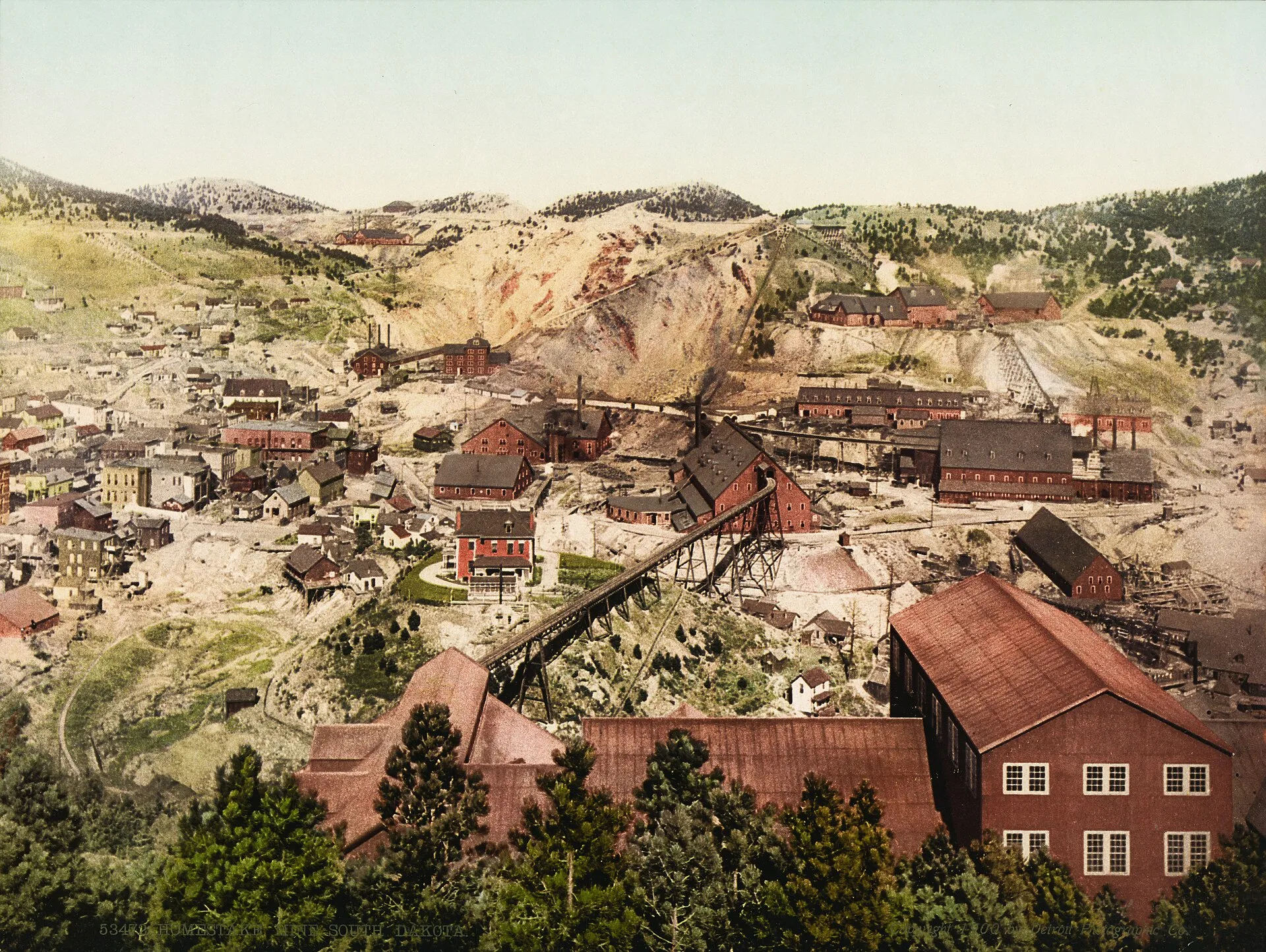
Raymond Davis Jr. of Brookhaven National Laboratory had begun measuring solar neutrinos in 1967 with 615 tonnes of the cleaning fluid tetrachloroethylene, 1,478 m underground in the Homestake gold mine in Lead, South Dakota. Electron neutrinos above 0.814 MeV convert chlorine-37 into radioactive argon-37. Every few months the few dozen argon atoms produced were flushed out with helium and counted in small proportional counters. From the first results in 1968 the rate was well below the prediction of John Bahcall's solar model. For more than two decades it was the only measurement of its kind. Critics repeatedly asked whether the extraction efficiency or the counting could be trusted.
What happened
Data taking continued until 1994. After Davis retired from Brookhaven in 1984, the experiment was carried on in partnership with the University of Pennsylvania under Kenneth Lande. In 1998 Bruce Cleveland, Davis, Lande and colleagues published the complete analysis in The Astrophysical Journal: 'Measurement of the solar electron neutrino flux with the Homestake chlorine detector'. It combined 108 extractions between 1970 and 1994.
The standard solar model of the time predicted about 7.7 SNU. The measured rate was therefore close to one third of the expectation. The paper also documented extensive checks of the method, including the addition of known amounts of stable carrier argon in every run and tests with radioactive tracers to measure the extraction efficiency, checks which had been central to the experiment's credibility.
Reaction
By 1998 the deficit seen at Homestake had been confirmed in kind by Kamiokande, SAGE and GALLEX, and the final paper served as the definitive reference value for the chlorine rate. Suggestions from the 1980s that the rate varied with the sunspot cycle were not supported by the full data set. The same year, Super-Kamiokande's atmospheric result made neutrino oscillation much more plausible as the explanation of all the deficits.
Consequences
- The Homestake value became the benchmark that global fits to solar data, and the SNO results of 2001 and 2002, had to reproduce; the large-mixing-angle MSW solution explains the one-third rate as a mix of converted boron-8 neutrinos and partly suppressed beryllium-7 neutrinos.
- Davis shared the 2002 Nobel Prize in Physics with Masatoshi Koshiba for the detection of cosmic neutrinos.
- The radiochemical technique, pioneered here, was used by the gallium experiments.
- The mine later became the Sanford Underground Research Facility, which hosts the far detector of DUNE.
Frequently asked questions
What was Homestake's final result?
2.56 ± 0.23 SNU (combined uncertainty), about one third of the standard solar model prediction, published in 1998.
How long did the Homestake experiment run?
From 1967 to 1994, with the final analysis using data from 1970 to 1994.
Why was the final result important?
Its long, carefully checked data set made the solar neutrino deficit impossible to dismiss as an experimental error.
Original papers
- Final resultB. T. Cleveland et al., Measurement of the solar electron neutrino flux with the Homestake chlorine detector, Astrophys. J. 496, 505 (1998)DOI 10.1086/305343
Concepts
Mentioned in 1 page
Lessons 1
Last updated: · Editorial standard
Cite this page
Text
Neutrino Atlas (2026). “1998: Homestake publishes its final solar result”. Retrieved 22 November 2026, from https://neutrino-atlas.com/timeline/1998-homestake-final-result/BibTeX
@misc{neutrinoatlas20261998homestakefinalresult,
  title        = {1998: Homestake publishes its final solar result},
  author       = {{Neutrino Atlas}},
  year         = {2026},
  url          = {https://neutrino-atlas.com/timeline/1998-homestake-final-result/},
  note         = {Accessed 2026-11-22},
  language     = {english}
}